


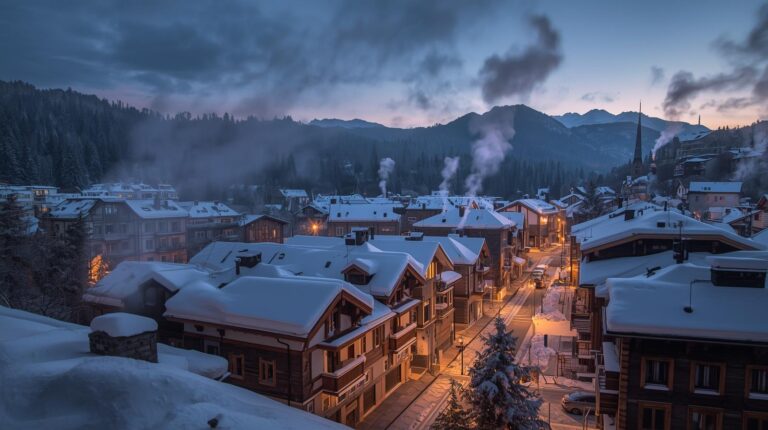
Why does air pollution occur in Bansko?
The problem is not the result of industrial activity – there are no large factories in Bansko. The reason is a combination of human factors and unique geography. The main source of pollution is the massive use of solid fuel (wood and coal) for domestic heating. When the sun sets and temperatures drop below zero, hundreds of chimneys start spewing smoke simultaneously.
Temperature Inversion: The Basin Trap
Bansko is located in the Razlog Valley, surrounded by three mountains – Pirin, Rila and the Rhodopes. During the quiet winter nights, the phenomenon of temperature inversion. The cold air gets "trapped" at the bottom of the valley, and a layer of warmer air forms above it, acting as a lid.
The result? All the smoke from the stoves can't rise and dissipate. It stays low to the ground, concentrating fine particulate matter (PM10 and PM2.5) right where people walk.
Health Impact: What are we breathing?
Air pollution in Bansko during peak hours can exceed WHO standards several times. Fine dust particles are so small that they pass through the natural filters of the respiratory system and enter the bloodstream directly.
| Indicator | Short exposure effect |
|---|---|
| PM 2.5 (Particulate Matter) | Eye irritation, cough, shortness of breath. |
| Carbon monoxide | Headache, fatigue, nausea. |
| Nitrogen dioxide (from traffic) | Worsening of asthma and allergies. |
What are the cleanest areas in Bansko?
Not all cities suffer from smog equally. Choosing the location of your accommodation is the most important factor in the quality of your stay.
1. High area “Gramadeto” and the foot of the mountain
This is the area above the lift station. Being at a higher altitude, it often remains above the inversion layer. The air here is significantly fresher, and most large hotels use modern heating systems (gas, pellets or electricity).
2. “St. Ivan” area”
Located in the southernmost part of the city, near the border of Pirin National Park. Thanks to the mountain breeze, the air here circulates constantly, which prevents the accumulation of thick smog.
3. Areas to avoid: Center and Old Town
The low-lying part of Bansko, around the square and churches, is the most affected. The dense construction and old houses that still rely on wood and coal make evening walks there a challenge for people with sensitive respiratory tracts.
How to protect yourself: Practical tips
If you are already in Bansko, follow these tried and tested risk-minimizing strategies:
- ⌚ Correct time for activity: The cleanest air in the city is between 10:00 and 15:00. The sun breaks the inversion layer and the wind disperses the particles. Use this time to go for walks.
- 🏔️ Upward Escape: Remember that only 10-15 minutes away by lift or car, Banderishka meadow or The Shiligarnika, the air is crystal clear. The mountain is your salvation.
- 🪟 Room ventilation: Never open windows in the evening after 6:00 PM. It is best to ventilate intensively around noon.
- 📱 Track the data: Use apps like AirBG.info or IQAir. They have sensors in different parts of Bansko and will show you in real time where the situation is critical.
The Future: Is there a solution to the problem?
Bansko Municipality is actively working on projects to gasify private homes and replace old stoves with environmentally friendly alternatives. The process is slow, but progress is being made. As a tourist, you can also help by choosing accommodation in facilities that use renewable sources or natural gas.
In conclusion, air pollution in Bansko is a seasonal problem that shouldn't stop you from vacationing. With a little planning and choosing the right place to stay, you'll enjoy all that Pirin has to offer without compromising your health.
 English (UK)