

Statistical profile: How many people live in Bansko in 2026?
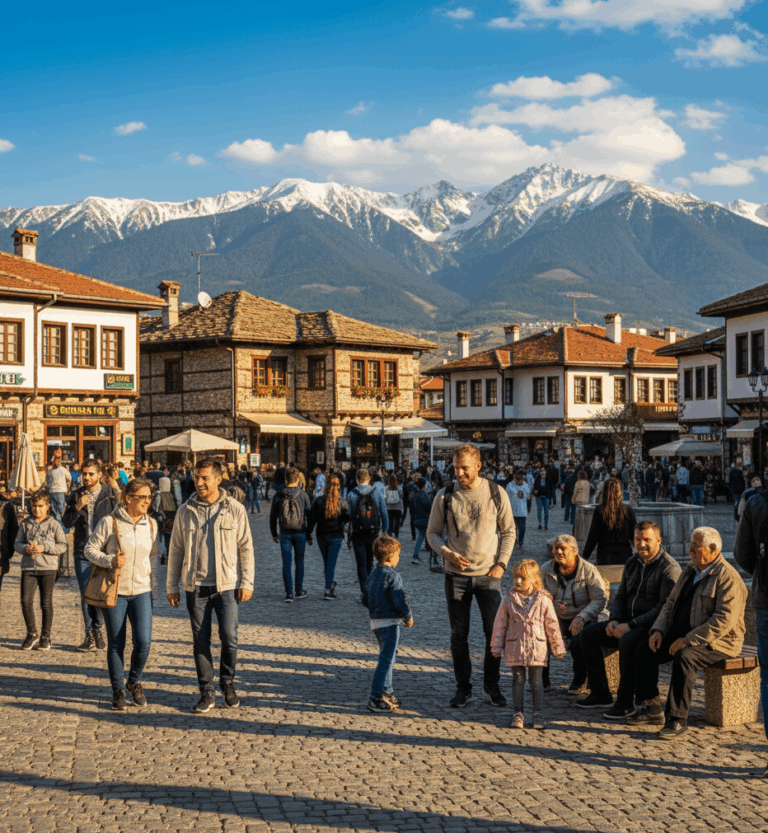
According to official census data and current GRAO registers, the population of Bansko municipality is an extremely dynamic figure. Here we must distinguish between those who live permanently by address registration and those who reside in the city for long periods of time.
- Bansko Municipality: The total population of the municipality, including the town of Bansko, the town of Dobrinishte and the villages of Banya, Obidim, Kremen, Mesta and Filipovo, is approximately 12,722 people according to the latest large-scale report.
- Bansko town: The administrative center is home to about 9,000 permanent residents. However, this number is misleading, as the actual presence in the city is often double that, even outside the active tourist season.
- Tourist capacity: During the winter season (December – March) the town is transformed. With a capacity of over 20,000 beds in hotels and apartment complexes, Bansko welcomes over 200,000 individual tourists annually.
The Multicultural Mosaic: Nationalities in Bansko
Bansko is one of the most international small towns in Southeastern Europe. The percentage of foreign citizens who have purchased property and settled here continues to grow, shaping a unique image of the local population of Bansko.
The British and Irish Community
After 2005, Bansko experienced a massive “boom” of British investors. Today, a large part of these people are retirees or families who have made Pirin their permanent home. They make up between 5% and 7% of the seasonal residents and are integrated through their own organizations, charitable initiatives and even local English-language media.
The wave of digital nomads
This is the newest and most dynamic group in town. Bansko has been named one of the best remote work hubs in the world. Young professionals from the US, Germany, Israel and the Netherlands spend months here. They don’t always figure in the resident population statistics, but their contribution to the local cafes, restaurants and co-working spaces is vital to the economy outside the ski season.
Eastern European presence
There is a significant number of Russian and Ukrainian citizens who have chosen Bansko as their refuge or place to invest. The neighboring Balkan countries – Greece, Serbia and North Macedonia – also have their representatives, with the Greek community being particularly active in the restaurant and retail sectors.
Ethnic Communities: The Roma Community and the Work Behind the Scenes
In the shadow of five-star hotels and international festivals, the Roma community in Bansko plays a critical role, often unnoticed by the mass tourist. They represent around 4.7% of the local population (approximately 600 people) and are an integral part of the labor market.
This community is the main source of labor in the sectors that maintain the “hygiene” and functionality of the resort:
- Infrastructure support: Snow removal, garbage collection and road network maintenance.
- Construction sector: Almost every new building in Bansko is built with the participation of local craftsmen and general workers from the community.
- Seasonal agriculture: In the vicinity of Bansko and Razlog Roma families are key to potato production and livestock farming.
Infrastructure and education: How does the city serve these people?
The growing and diverse population of Bansko places high demands on the local administration. The city has a well-developed education system, including vocational high schools in tourism and electronics, where children of locals, foreigners and minorities study together. This is where integration happens in practice.
Healthcare and administrative services are also adapting – it is not uncommon in the municipality or at the local clinic to encounter employees speaking English or Russian to serve the international community.
Conclusion: Bansko as a model for the future
Bansko is no longer just a geographical concept, but a social experiment that seems to be successful. The city manages to balance the traditions of the old Bansko families with the needs of the modern digital nomad. Mutual respect between Bulgarians, foreigners and local ethnic minorities is the key to the sustainable development of the region.
Whether you are an investor, a tourist, or someone considering moving here, understanding the demographic picture will help you appreciate Bansko not just as a ski destination, but as a living, breathing, and multifaceted organism.
Are you ready to become part of the Bansko community?
Check out our detailed guides to living, working and investing in the best winter resort in the Balkans.
 English (UK)