

Statistical profile: How large is the Roma community in Bansko?
According to official national census data, the population of Bansko municipality is just over 12,700. Of these, nearly 600 people officially identify as Roma, representing about 4.71% of the local population. However, these figures often do not capture the full dynamics of seasonal employment and internal migration.
Key demographic indicators
- Share of population: 4.7% (above the national average).
- Economic activity: Predominantly in the field of services, construction and utilities.
- Age structure: A significantly younger population compared to the aging majority in the region.
While foreign settlers and investors are subject to constant scrutiny, the Roma community in Bansko remains on the periphery of public interest, except when social tensions arise. This creates a distorted picture of the social composition of the city.
Geography of the divide: Where does the local community live?
There is a clear territorial segmentation in Bansko. The tourist flow is concentrated in the "upper" part - the area around the Gondola Lift and the luxury complexes. At the same time, the Roma community mainly inhabits the northern and eastern outskirts, towards the industrial zone and the road to the village of Banya.
This "invisible border" is not just geographical, but also social. The infrastructure in these areas often lags behind the glamour of the center, and access to quality services is difficult. It is here that the contrast between "tourist Bansko" and "living Bansko" is most strongly felt.
Invisible Labor: How the Roma Community in Bansko Maintains the Resort
Every successful resort needs a huge army of personnel who perform the hard physical labor. Without the participation of the Roma, the maintenance of Bansko would be unthinkable. Let's look at the main sectors in which their contribution is critical:
| Sector | Main activities |
|---|---|
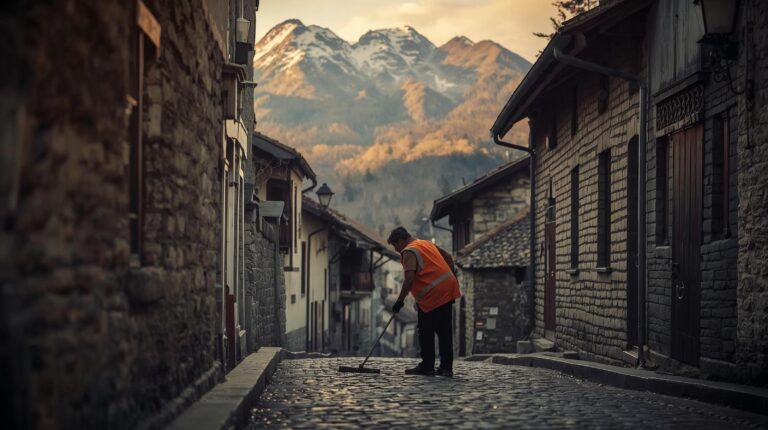
| Cleanliness and landscaping | Street maintenance, garbage collection, and taking care of the parks that tourists see every morning. |
| Construction | Construction of new hotel facilities, repair of the road network and servicing the property boom. |
| Agriculture | Production of the famous Bansko potatoes and animal husbandry - the basis of local cuisine. |
Social Dissonance: Five Stars Against Harsh Living Conditions
The paradox of Bansko is striking. While platforms like Airbnb and Booking offer thousands of luxury apartments, a large portion of local Roma families struggle with housing problems that seem unthinkable in 2026. National statistics show that over 431% of Roma live in difficult conditions, and Bansko is no exception.
Many families live in overcrowded housing, while entire buildings in the tourist area sit empty for most of the year. This economic divide is a challenge for local government and civil society, requiring long-term solutions, not just campaign measures.
Education as the only way out
Integration takes place in the classroom. In Bansko, unlike in large urban ghettos, children often study in a more mixed environment, which is a positive sign. However, economic pressures on families often force young people to leave the education system early to start working and helping in the household.
Why should we care?
As guests or new residents (nomads) in the city, we are part of its ecosystem. Understanding the full picture of the Roma community in Bansko makes us more responsible travelers and citizens. Bansko is not just a setting – it is a living organism in which every work deserves recognition.
The next time you see the employees shoveling snow at 5 a.m. or maintaining the gardens at your complex, think about their story. Small gestures of respect and appreciation are the first step towards breaking down social barriers.
The article was prepared with the aim of raising awareness about the social realities in the resort municipalities of Bulgaria.