


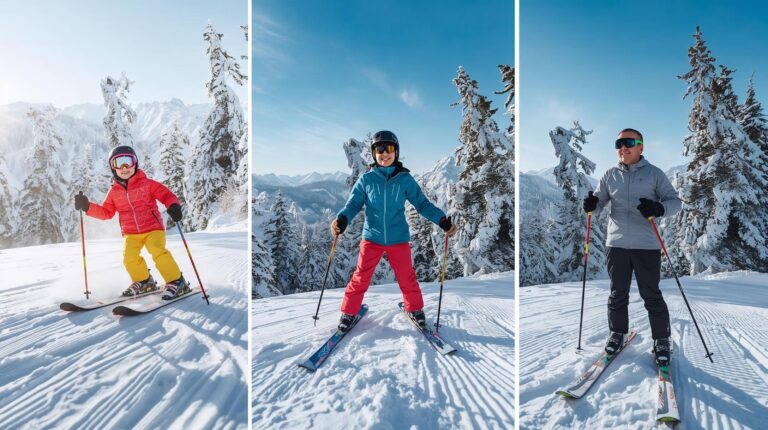
1. The Golden Rule: Friends are bad teachers
Before we look at the specifics by age, let's clarify something critical: "Learning from a friend is the fastest way to hate skiing (or your friend)." Good skiers often ski by "muscle memory" - they are not aware of the mechanism of their movements.
Often a friend will take you to the blue piste or the ski road to Bansko before you are ready. When panic sets in, the learning process stops and the fight for survival begins. Invest in a professional instructor from the licensed ski schools in Bansko for at least the first 3 days. This will save you years of poor technique and potential injuries.
2. The youngest skiers (Age 3-6 years)
The goal with children is simple: To love the snow. Parents, be realistic – for a 3-year-old, a “lesson” is just playing with ski boots. Toddlers don’t understand physics and vectors. If you tell them to „press the tongue of the boot,“ you’ll get a blank stare.
The language of the game
Use metaphors that they understand:
- „"Crush the grapes!"“ – for pressure in the front of the shoe.
- „"Be tall like a giraffe / be small like a mouse"“ – for vertical body work.
- „"Pizza and French fries"“ – the most popular method for explaining plow (stopping) and parallel skis (starting).
Young children often lack the strength in their hips to hold their skis in a „plow“ position. The rubber clutch on the ski tips does the work for their muscles, allowing them to focus on balance. Important: Remove it as soon as the child starts to control their skis independently.
3. The Golden Age (7-12) and Teenagers
These are the "suckers" of the slope. Children between 7 and 12 years old have a low center of gravity and minimal fear. At this age, group lessons in Bansko are extremely effective because healthy competition motivates them.
Challenges for teenagers (13-17 years old)
Here the approach changes dramatically. Teenagers don't want to be treated like children. The instructor should be more of a mentor and partner in adventure. A sudden increase in height often leads to temporary clumsiness - the brain needs time to calibrate the new length of the limbs to the terrain.
4. The Adult Beginner (18-50)
As adults, we have one main enemy: The instinct of self-preservation. Unlike children, we are aware of the risk and this leads us to make the biggest mistake in skiing – the „back stance“.
| Problem | Reason | Solution |
|---|---|---|
| Burning thighs | Weight too far back | Pressure on the shoe tongue |
| The skis don't turn. | Lightening the tips | Shifting the center of gravity forward |
| Fear of speed | Direct line down | Completing the turn to a C-shape |
Specifics for the ladies
Women have anatomical features (lower center of gravity and wider pelvis) that change the angle of the femur (Q-angle). Advice from experts in Bansko: Don't just rent "smaller size" men's shoes. Look for specific women's models - they have a lower back (cuff) so as not to squeeze the calf, which starts lower in women.
5. The Senior Skier (50+) and Longevity on the Slope
After the 1950s, the goal was efficiency, not brute force. Modern equipment allows you to ski with minimal effort if you use the physics of the skis. Forget the old school ones that require aggressive body rotation.
The method of small movements
Focus on gently lifting the little toe of your inside foot towards the turn. This movement automatically tilts the outside ski, which starts to "cut" the snow on its own. This style is gentle on your knees and allows you to ski longer without fatigue.
6. Special situations: Weight and joints
Skiing in Bansko is accessible to everyone, as long as you know your body's limits. If you are a heavier skier, pay attention to the stiffness of the boot (Flex). A boot that is too soft will deform under your weight and you will lose control.
7. Off-piste equipment and preparation
If you plan to ride regularly, invest in one first. own ski boots. You can rent and change skis according to the conditions, but the shoe must be adapted exactly to your foot. Uncomfortable shoes are the #1 reason for giving up the sport.
6-week pre-season program
- Week 1-2: Aerobic endurance – walking on an incline or swimming.
- Week 3-4: Leg strength – squats (without weights) and plank for core stability.
- Week 5-6: Proprioception – exercises for balancing on one leg on a soft surface.
Pirin Mountain doesn't care about your age or weight, as long as you respect its laws. Put on comfortable shoes, smile and enjoy the magic of the white sport!

 English (UK)