



The economic boom and the birth of the modern real estate market
In 2003. the transformation of Bansko found its most vivid expression in the hyperactivity of the real estate market. The city has become a large-scale construction site, where agricultural lands on the outskirts have been massively changed their purpose. Investment interest is concentrated in the so-called "Golden Mile" - the area around the starting station of the future lift.
Here, property prices jumped from symbolic levels to over 120 euros per square meter in just a few months. This surge was driven by a fundamental change in the profile of investors. In place of Bulgarian buyers looking for small villas, British and Irish investors came. They imposed the speculative model „"buy-to-let"“ (buy-to-let), which led to a boom in the construction of apart-hotels and gated communities.
Expert Commentary: Changing Livelihoods
In less than a year, the local population's main livelihood transformed from traditional agriculture and crafts to construction and services. This generated quick incomes, but also set off serious inflationary pressures that changed the social fabric of the region forever.
The Gondola: The Infrastructural Heart of the Project
The critical point in the transformation of Bansko was the large-scale investment of the concessionaire "Yulen" AD. On December 13, 2003, the gondola lift was officially put into operation (Gondola), produced by the Austrian leader Doppelmayr. With a capacity of 2,400 people per hour, the facility solved the logistical nightmare of minibuses on the narrow road to Shiligarnika.
| Modernization object | Technical parameters |
|---|---|
| Gondola Lift | 8-seater cabins, Doppelmayr |
| Ski road to the city | 7 km, fully lit, snow cannons |
| New tracks | Expansion to over 70 km total length |
| Snow system | Guaranteed coverage from December to May |
Environmental challenges and global recognition
The large-scale transformation of Bansko did not go without resistance. Since the ski area falls within the territory of Pirin National Park, the construction provoked sharp reactions from environmental organizations. UNESCO placed the region under special surveillance, which required the re-categorization of parts of the site into „buffer zones“. This conflict between economic development and nature conservation remains relevant to this day.
However, in the same year 2003, Bansko received its world-class glory. The legendary Alberto Tomba visited the resort to inaugurate the slope bearing his name – „Tomba“. This event, combined with the hosting of the Balkan Cup, established Bansko as a destination for professional sports of the highest rank.
Urban change and the "New City"„
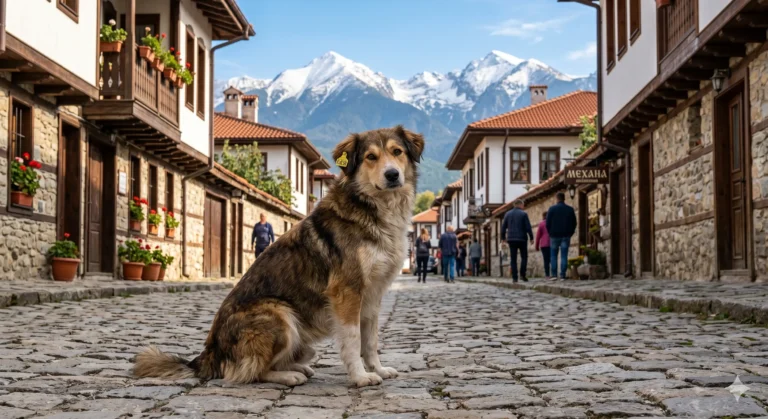
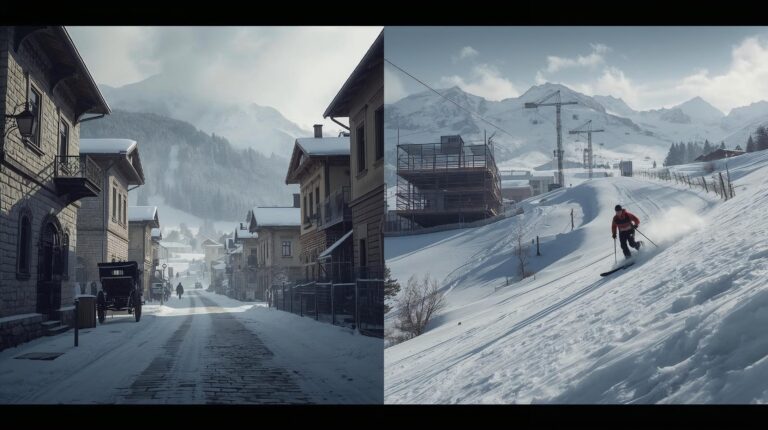
The architectural appearance of Bansko has changed irreversibly. The construction of landmark buildings such as the Tanne Hotel and the preparation for the Kempinski Grand Arena have begun. A clear contrast has formed between the Renaissance center with its cobblestone streets and the modern, dynamic district around the lift. This dualism is today the trademark of the city - a place where the traditional tavern coexists with the luxurious spa complex.
Are you interested in current investments?
Explore the full database and comparative tables on price developments from 2003 to today on our specialized portal.
The Legacy of the Big Bang
In conclusion, the transformation of Bansko in 2003 was not just a construction project, but a strategic change in the economic direction of the entire region. The city made its difficult choice: to give up the tranquility of a mountain village in the name of global visibility and economic prosperity. The results are in - today Bansko is a leading center not only for skiing, but also for digital nomads and year-round mountain tourism.
Analyzing the events of two decades ago, it becomes clear that 2003 was the year of bold decisions. Without the modernization of "Yulen" and international marketing, Bansko would probably have remained a local destination. Instead, today we speak of it as the "Balkan St. Moritz", thanks to the foundations laid in that tumultuous year of 2003.