

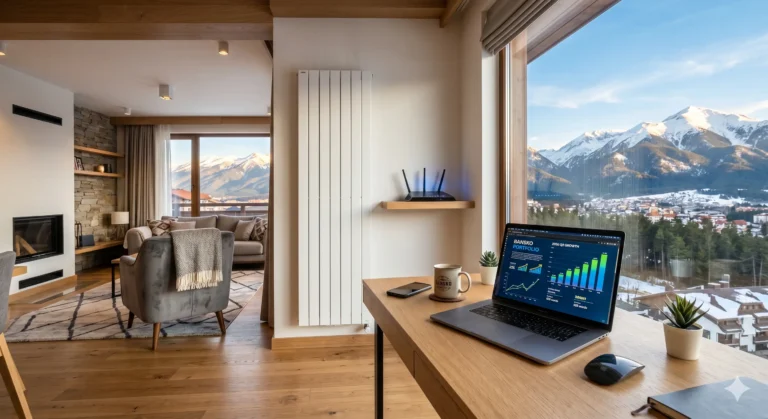
1. Internet in Bansko: Speed, stability and providers
As Bansko is considered the capital of digital nomads in Europe, internet connectivity is world-class. The city has an extremely developed digital network that fully meets the needs of software engineers, designers and online entrepreneurs.
Major national telecommunications operators
The three major telecoms in Bulgaria operate in the Bansko region, offering both mobile and fixed services:
- A1 Bulgaria: Leader in fixed and mobile internet speeds. Supports excellent 5G network in the urban area with speeds up to 466.5 Mbps. Offers high-speed fiber internet in most of the city.
- Vivacom: The operator with the most reliable and broadest geographical coverage in the region. Their fiber optic network covers both the central areas and the peripheral neighborhoods around the lift base station. 5G speeds reach up to 430 Mbps.
- Yettel: Known for their high quality voice services and stable mobile internet (up to 400 Mbps on 5G network). They offer excellent solutions for home internet over a mobile network (5G fixed wireless access), which is a great alternative for remote buildings.
Fiber-to-the-Home
Fiber optic cables are now standard for most residential complexes in Bansko. They guarantee low latency (ping between 5-20ms) and symmetrical download and upload speeds, which is a prerequisite for smooth video conferencing on platforms such as Zoom and Teams. The average Uptime of fiber optic networks in the city exceeds 99.5%.
| Technology type | Average speed | Monthly fee (BGN) | Status and recommendation |
|---|---|---|---|
| ADSL / Copper cables | 10 – 20 Mbps | 15 – 20 BGN. | Outdated technology, avoid it. |
| Cable (Coaxial) | 50 – 100 Mbps | 20 – 30 BGN. | Widespread in older cooperatives. |
| Optical (Fiber Optic) | 100 – 500 Mbps | 25 – 50 BGN. | The best and most stable option for work. |
| Mobile 5G (Home) | Up to 500Mbps | 30 – 60 BGN. | Ideal for the periphery without cable coverage. |
2. Electricity grid and energy costs
As part of Western Bulgaria, the electricity distribution network in Bansko is managed by the monopolist Electrohold (until recently known as CEZ Bulgaria). While the transmission network is one, the retail market for household consumers is gradually going through stages of liberalization.
The specifics of the mountain town require increased attention to electricity costs, as a large part of the holiday apartments rely entirely on electricity for heating and water heating.
Sample monthly electricity bills (Residential consumers)
Bills vary dramatically depending on the season, the thickness of the building's insulation, and the appliance used:
- Summer period (May – September): Between 40 and 80 BGN per month for a standard two-room apartment (includes refrigerator, water heater, cooking and lighting).
- Winter period (October – April): Between 150 and 350+ BGN per month if the apartment is heated with convectors or old-generation air conditioners. With modern inverter heat pumps or high-end air conditioners, the bill can be reduced by up to 40%.
3. Water supply and sanitation (WW)
The water supply network in the city is managed and maintained by Blagoevgrad Water and Sewerage. A major asset for the region is the clean mountain water, which comes directly from the catchment areas of Pirin National Park.
Water quality and prices
The water in Bansko is exceptionally clean, soft and completely safe to drink straight from the tap. Outages in the central parts of the city occur rarely – mainly during planned repairs or accidents during the intensive snowmelt in the spring.
The price per cubic meter of water (including supply, disposal and wastewater treatment) is among the lowest in the country compared to large regional cities – it is around 2.50 – 3.20 BGN per cubic meter. The average monthly expense for a family of three rarely exceeds 20 – 35 BGN.
4. Gasification: Accessibility and advantages
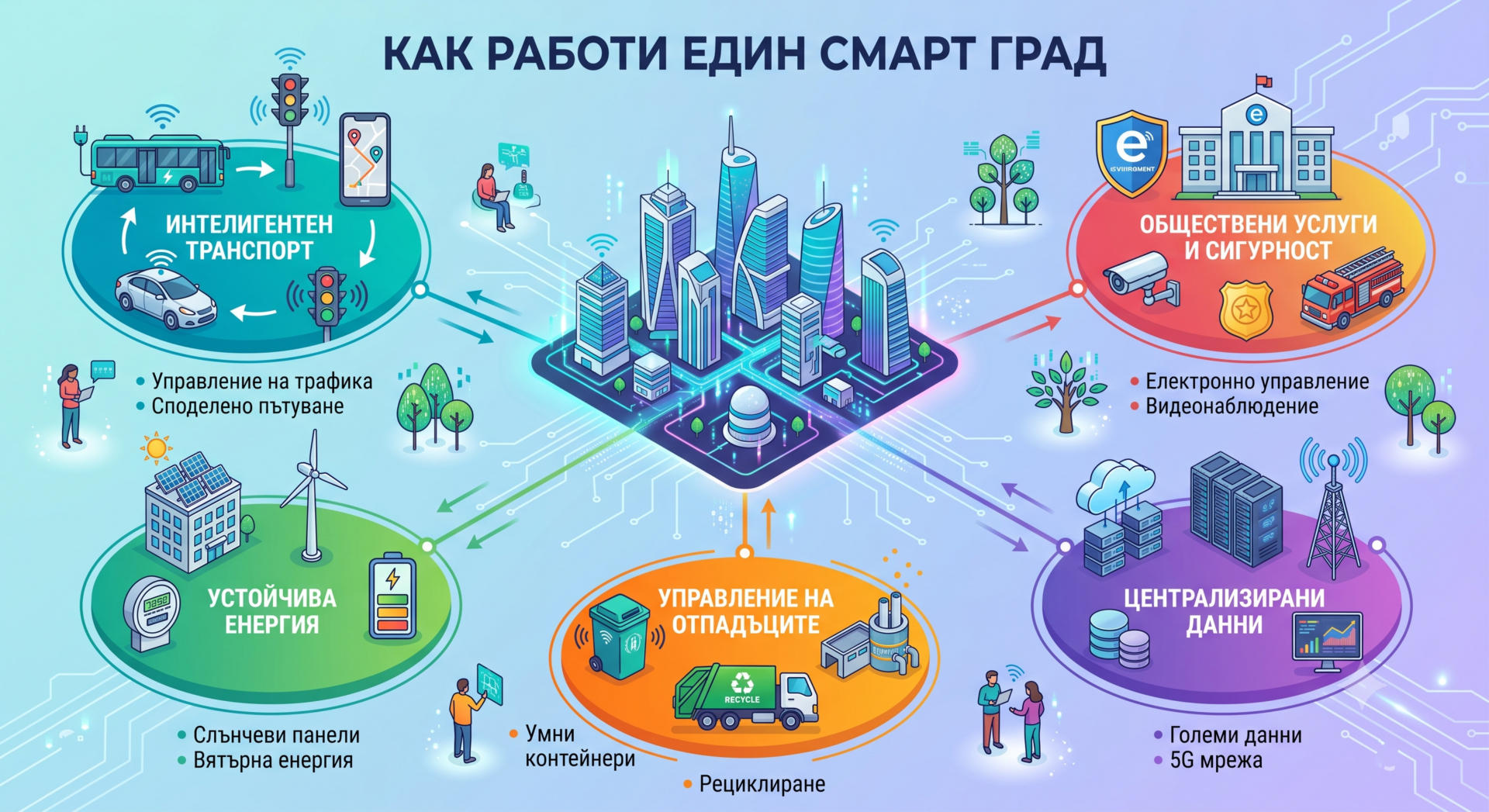
Gasification is an important part of the concept of sustainable infrastructure in Bansko. The licensed supplier for the region is Overgas Networks. Natural gas is an excellent choice for heating large houses and single-family buildings, but access to it has territorial restrictions.
Where is the gas network located?
The gas pipeline network mainly covers the lower and central parts of the city, the areas around the schools, the municipality and the main shopping streets. In the higher parts of the resort, near the ski slopes and the new complexes in the Gramadeto area, gasification is still economically unprofitable for the operator and there is no built transmission pipeline there.
The monthly costs of gas heating for an apartment of 80-100 sq m during the winter months vary between 100 and 180 BGN, making the blue fuel one of the most economical and comfortable energy sources.
5. Comparative analysis of heating types
The right choice of heating system in Bansko largely determines the intelligent management of the personal or investment budget.
| Heating method | Average winter consumption (Monthly) | Advantages | Disadvantages |
|---|---|---|---|
| Local heating (Pellet) | 90 – 150 BGN. | High efficiency, autonomy | Requires cleaning and storage space |
| Natural gas | 100 – 180 BGN. | Fully automatic control, environmentally friendly | Limited network coverage in the city |
| Air Conditioners / Inverters | 120 – 220 BGN. | Fast heating, cooling in summer | Efficiency drops at temperatures below -15°C |
| Electric convectors | 200 – 380+ BGN. | Low initial investment for appliances | The most expensive method in the long run |
6. Utilities and waste management
Garbage collection and maintenance of cleanliness are organized centrally by the Municipality of Bansko through municipal enterprises. Since Bansko is a leading mountain eco-resort, separate waste collection is actively encouraged here.
At key locations in residential areas and around large supermarkets (such as ”Aldo” and “Billa”), colored containers for plastic, paper, metal and glass are located. The municipal waste (MSW) fee is included in the annual real estate tax and is calculated based on the tax assessment of the property, which is standard practice in Bulgaria. Garbage collection in the central areas and around the ski area is carried out daily, and in the outer districts – 2 to 3 times a week.
7. Steps for registering and changing batches
When you acquire a new property in Bansko, the law requires that you transfer all existing accounts to your name within 30 days. Here is a quick checklist for the procedure:
- Change of ownership in Bansko Municipality: A tax return under Article 14 of the Tax and Customs Act is submitted to the Local Taxes and Fees Department together with a copy of the Notarial Deed.
- Current transfer (Electrohold): It can be done online through their web portal or on site at the nearest customer service center (CSC Razlog/Blagoevgrad). A notarial deed and an agreement for change of holder are required.
- Water transfer (Water and Sewerage Blagoevgrad): An application for a change of user is submitted to the local branch of the company in the town of Bansko. The water meter is detected on the date of transfer of possession.
Conclusion
The current Bansko infrastructure offers an excellent balance between affordable prices and European quality of services. The development of high-speed optical networks has turned the city into a perfect destination for digital nomadism and shared workspace. However, before buying a property, always check the type of electricity bill and the condition of the local heating to guarantee low operating costs and high comfort during the beautiful mountain winters.