


Did you know?
The naming of the central streets in Bansko It is no coincidence. It reflects the local community's desire to preserve the memory of the golden ages of Bulgarian culture and spirituality, turning an ordinary walk into an outdoor history lesson.
Historical context and spiritual significance of St. Kliment Ohridski Street
To understand the significance of this central artery, we need to look at its patron. Saint Clement of Ohrid is among the most significant saints of the Orthodox Church and one of the most influential disciples of the holy brothers Cyril and Methodius. He played a fundamental role in the spread of Slavic writing and the creation of the Ohrid Literary School, becoming the first bishop to preach in the Bulgarian language.
The naming of a key road in Bansko after him is a vivid expression of the spiritual and cultural heritage that the city jealously guards. The residents of Bansko have always been known for their vibrant Revival spirit, strong Orthodox faith and aspiration for enlightenment. The spiritual significance of the patron saint is felt in the overall atmosphere of the area, which connects the past with the modern appearance of the city.
Street character and urban environment
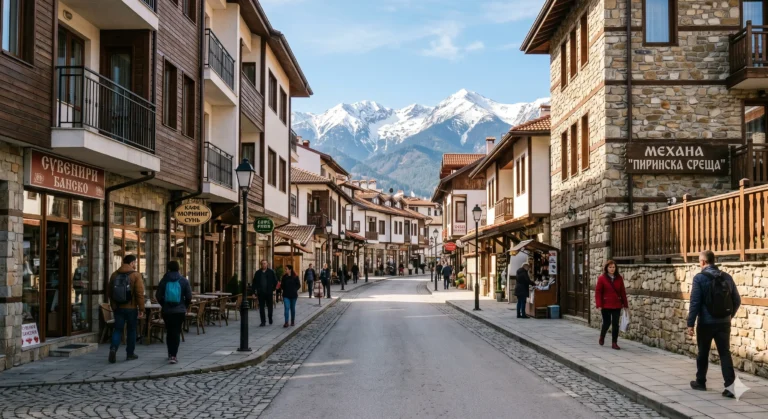
Today's popular Sveti Kliment Ohridski street functions as a typical central city street with a mixed type of development. Here, the traditional stone and wooden elements of the architecture for the region coexist harmoniously with modern functional buildings. Along its length you will find a variety of objects that serve both the daily needs of the local population and the flow of foreign and Bulgarian tourists.
The street is characterized by moderate to heavy traffic, especially during peak hours and during the active tourist season in Bansko. Thanks to its excellent connectivity with the rest of the road network, it provides quick access to the main administrative offices, shopping areas and dining establishments.
Key features of the site
For the convenience of visitors and for the needs of urban planning, the main parameters of the street are systematized in the following table:
| Parameter | Description and Specifications |
|---|---|
| Traffic type | Open to cars and pedestrians |
| Location | Central part of Bansko |
| Main function | Main city artery and transport link |
| Type of building | Mixed – residential buildings, commercial and administrative buildings |
| Accessibility | Excellent connectivity to the pedestrian zone and main roads |
| Traffic intensity | Moderate to intense (depending on the season) |
Location and how to get to St. Kliment Ohridski Street in Bansko
Navigating to the location is extremely easy, whether you are walking from the old city center or using a car. There are short-term parking options nearby, as well as numerous small retail outlets where you can purchase authentic local souvenirs, groceries, or enjoy a cup of hot drink.
Since the area around it is highly developed, it serves as a starting point to a number of cultural landmarks, museums and traditional Bansko taverns, located within walking distance. Below you can see the exact location of the street via the interactive map:
Useful tips for tourists and residents in 2026
If you are planning a visit or stay in the area of Sveti Kliment Ohridski street, it is good to keep in mind a few practical recommendations for maximum comfort:
- Shopping time: The shops along the street operate with normal business hours, but during the winter season many of them extend their hours to serve skiers.
- Parking: During busy months, free parking spaces on the street fill up quickly. It is recommended to use the designated paid parking lots nearby to avoid repatriation.
- Pedestrian access: The street is well equipped with sidewalks, making it safe for pedestrians wishing to quickly reach the administrative center of Bansko.
In conclusion, Sveti Kliment Ohridski street remains an integral part of the central urban structure of Bansko. It successfully performs its daily practical functions, while proudly bearing its name to remind generations of the enduring historical, cultural and religious wealth of the entire region.