

“In 2018, Bansko had to decide the fundamental question: will it remain simply a seasonal „winter capital“ or will it establish itself as a year-round economic hub, capable of attracting capital and talent 365 days a year.”
The Real Estate Market: The End of Speculation and the New Economic Reality
After years of volatility and uncertainty, the Bansko property market finally found its equilibrium point in 2018. This is a key moment in the overall transformation of Bansko, as the construction and real estate sectors have always been leading for the region.
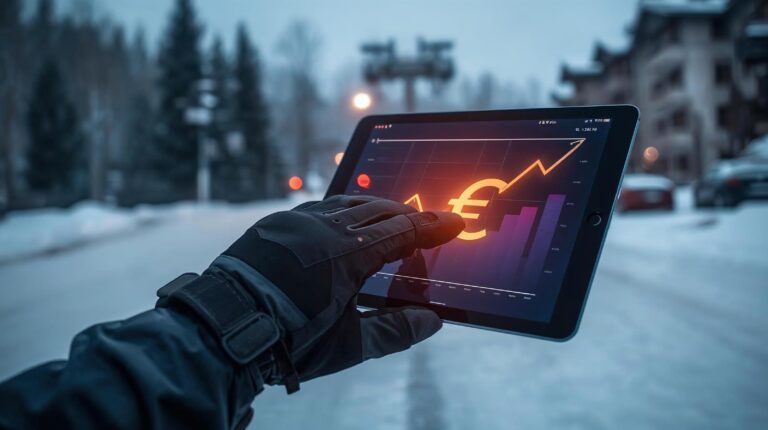
The data from this period is clear: the average price per square meter reached 1092 euros, and the sales volume increased by 12%. But more important than the dry numbers was the radical change in the mentality of buyers. They stopped looking for simply „the cheapest apartment in the mountains“ and started investing in quality, well-maintained complexes and long-term sustainability.
Key indicators for the property market (2018)
| Indicator | Value / Change | Trend |
|---|---|---|
| Average property price | 1092 euros/sq.m | Sustainable stabilization |
| Actual sales volume | +12% Growth | Return of trust |
| Accessibility factor | 1.47 | Healthy market |
| New building permits | > 30% Height | Investment optimism |
While major cities like Sofia and Plovdiv began to show signs of property overheating, Bansko offered a sensible alternative – affordability combined with high rental return potential. The growth in building permits by over 30% signals that developers are once again believing in the region’s potential, but this time with a focus on higher-end architecture and infrastructure.
The „Digital Nomad“ Phenomenon: When Laptops Beat Seasonality
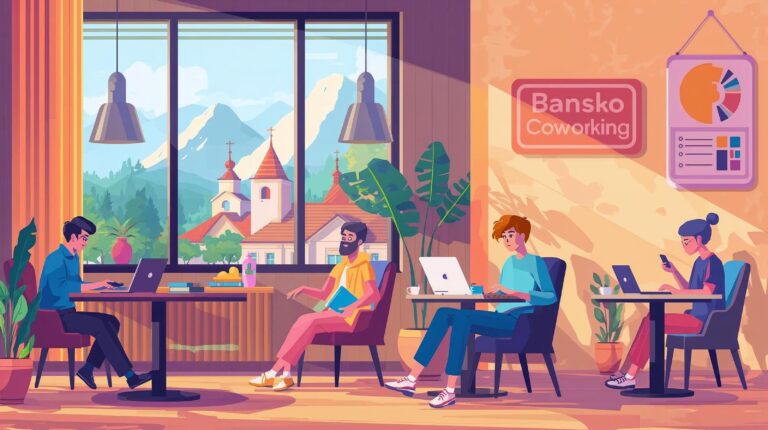
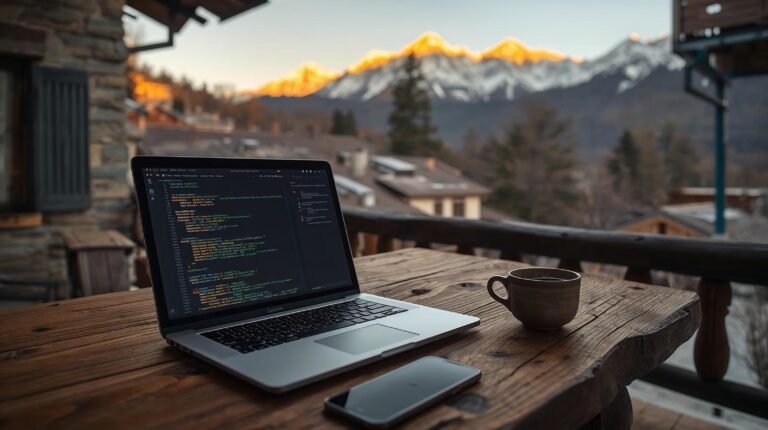
Perhaps the biggest economic surprise of 2018 came not from the ski slopes below Mount Todorka, but from the laptop screens in the emerging shared workspaces. That's when the real social happened. transformation of Bansko – the city has finally established itself as a leading European center for digital nomads.
What initially seemed like a bold experiment by a handful of enthusiasts has become a powerful economic engine. The community around Coworking Bansko created the so-called "magnet effect." Hundreds of young and highly paid professionals from the US, Germany, the UK and Israel didn't just visit the city for a week, but stayed for months.
Direct economic impact
It is estimated that in 2018 alone, the nomadic community generated over 1 million euros in direct revenue for local small businesses. These funds went directly into the pockets of owners of cafes, restaurants, laundries and landlords, and during the traditionally "dead" summer and autumn months.
The Battle for Pirin: Sustainability vs. Infrastructure
The path to change, however, was not without conflict. 2018 was marked by some of the most serious debates regarding the future of Pirin National Park. The case of the Second Gondola Lift and the expansion of the ski area went beyond the borders of the country, reaching UNESCO.
The Supreme Administrative Court’s decision in January 2018, which overturned the changes to the Park Management Plan, was a turning point. The subsequent UNESCO forum in Bahrain confirmed the global importance of nature in the region. These events set a clear framework for any future transformation of Bansko: economic development and expansion of the ski area cannot happen at the expense of the unique natural heritage.
This pressure forced businesses and local authorities to start thinking creatively. Instead of relying solely on new large-scale lifts, discussions began about:
- Digital optimization of queues in front of the starting station;
- Introducing environmentally friendly electric transport in the mountains;
- Development of alternative forms of tourism such as mountain biking and festivals.
Global recognition and sports diplomacy
Despite the structural changes, Bansko's international prestige remained intact. In 2018, the resort defended its title of "Best Ski Resort in Bulgaria" for the sixth consecutive time at the prestigious World Ski Awards. This is not just vanity – these awards are a key marketing tool that attracts high-end tourists from all over Europe.
Hosting the Snowboard World Cup was another highlight. The successes of Bulgarian stars Radoslav Yankov and Alexandra Zhekova in front of a home crowd not only inspired a new generation of athletes, but also cemented Bansko in the „Champions League“ of winter resorts. The cultural calendar, including the International Jazz Festival and the Bansko Film Fest, added much-needed depth to the town’s image as a place for sports, culture and intellectual life.
Conclusion: The Legacy of a Watershed Year
In retrospect, 2018 laid the foundations for the modern transformation of Bansko. It has proven that the city has a unique ability to adapt to new economic realities. From chaotic development, the resort has moved to a quality strategy, attracting investors with a long-term horizon and globally-minded professionals.
Are you ready to invest in the future?
Bansko continues to develop at a rapid pace. If you are looking for your new home or your next business opportunity, check out our current offers.