



The Architecture of Old Bansko: The House as a Fortress of the Spirit
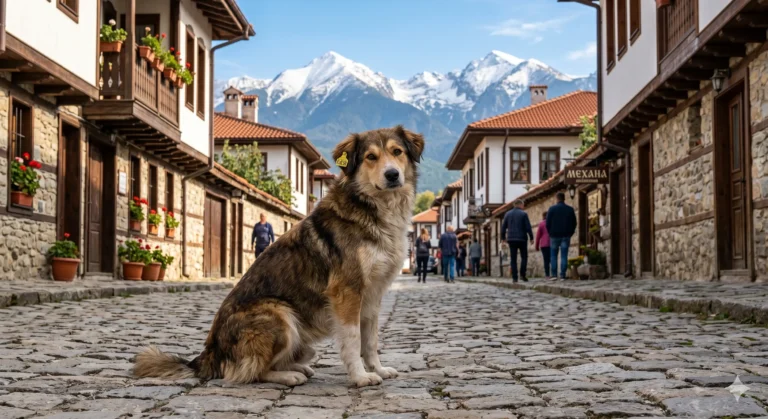
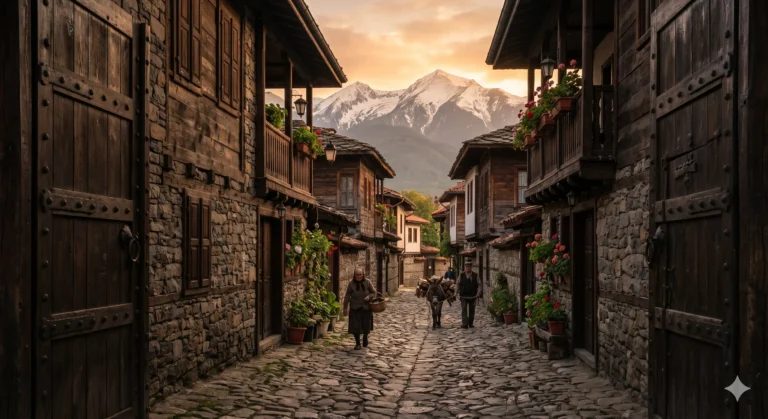
The architecture in the old quarter is the most faithful chronicler of lost morality. The Banska Kashta is not just a building; it is a manifesto of character. Built of solid stone and centuries-old pine, these homes resemble small medieval fortresses. This is no coincidence – the architecture reflected the need for security in the turbulent times of Ottoman rule.
Did you know that?
The typical Bansko house (like the famous Velyanova house) has a complex system of hiding places and loopholes. The high walls and heavy gates guarded not only the property, but also the honor of the family. However, behind the harsh walls was hidden a world of extraordinary harmony, spacious verandas and carved ceilings.
This construction speaks of people who lived with the clear awareness that they were masters of their destiny. They did not wait for outside help – they created their own, inaccessible reality, in which knowledge and faith were in the first place.
Banska Bystrica: A Citizen of Europe with Roots in Pirin
Historians are unanimous – Old Bansko is an economic and spiritual phenomenon. How did a mountain town become the cradle of the Enlightenment? The answer lies in the enterprising spirit of local merchants.
The Bansko merchants were truly cosmopolitan. They traveled with caravans to Vienna, Budapest, Leipzig and London. They exported cotton and tobacco, but they imported something much more valuable than gold – progressive ideas and European culture. They saw how the free world lived and brought this model home, investing in education and art.
The Code of Honor: Being Rich Is a Responsibility
In Old Bansko, wealth was not a source of pride, but a resource for the community. The wealthy Bansko resident was obliged to be a benefactor. This philanthropy is embedded in the foundations of the city. The most striking example is the construction of Holy Trinity Church„.
Legends tell how the entire community came together – some gave money, others labored, and still others carried stones with ox carts. This was not just a construction project, but an act of communal self-affirmation. When the Turkish authorities placed restrictions on the size of the temple, the people of Banska Bystrica used cunning and diplomacy to erect one of the most magnificent spiritual monuments in the Balkans.
Woman – the silent guardian of ancestral memory
While men were absent for years on the trade routes, women were the true backbone of Bansko. The Bansko woman had the role of manager, keeper of the key and educator. The upbringing of children was "Spartan" and focused on three pillars:
- ✔ Honesty: The lie was a stain that could not be washed away for generations.
- ✔ Hard work: Laziness was considered a moral defect.
- ✔ Usefulness: The meaning of life was to serve one's family and city.
It was these mothers who raised giants like St. Paisius of Hilendar & Neophyte Rilski. These personalities are not the result of chance, but of an environment in which spirituality was elevated to a cult.
The Clash of Ages: A Comparative Analysis
| Value system | Old Bansko (18th-19th centuries) | Modern Bansko (2026) |
|---|---|---|
| Success | Contribution to community and honor. | Personal prosperity and property. |
| Relationships | The given word is law. | Contracts and legal disputes. |
| The environment | Silence, stone and cobblestone. | Noise, neon and dynamics. |
How can we rediscover the spirit of Bansko today?
Despite the modern development, the spirit of Old Bansko has not disappeared. It lives in the small details that require us to slow down. To experience the real Bansko, visit:
- The Nikola Vaptsarov Museum Complex„ – to understand the depth of the Bansko soul.
- Spiritual and Historical Center "St. Paisius of Hilendar"„ – where history comes alive.
- The old taverns in the center – look for those where authentic Bansko songs are still sung, not just food is served.
The world of dignity may seem like a utopia in 2026, but perhaps this is exactly the „utopia“ we need for balance. Hotels are built and torn down, but the spirit embedded in the stone walls of Old Bansko, remains forever.
The next time you walk down the cobblestones, touch a wall. Think about the people who built it with faith in the future. Their legacy is not in the properties, but in the strength of the community, which today, more than ever, we must preserve.
Are you planning a walk through the past?
Share this article with friends so that together we can preserve Bulgaria's cultural heritage!