

„"Why are you yelling, huh? Get yourself a pepper and eat it so you can grow up!"“
If this sentence sounds exotic to you, you are not alone. The authentic Bansko dialect is not just a variety of the Bulgarian language; it is a cultural phenomenon, a historical heritage and a kind of "secret code" that the locals keep with pride. It is as hard as the Pirin stone, resonant as the chans of the Kukeri and colorful as the Banska Kapama.
Language as a living history of the city of Bansko
Bansko is a city with character. For centuries it was isolated in the mountains, relying on the cotton trade and its strong connections to the world, but always keeping its inner peace intact. The dynamics of this dialect has survived almost unchanged. It bears the marks of the Old Bulgarian language – especially in the preservation of certain vowels and sonorous consonants – but also the influence of the active life of the former merchants.
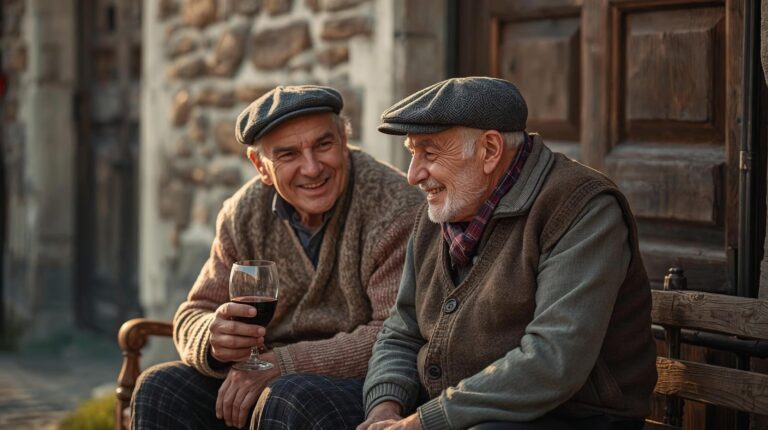
The characteristic Bansko dialect is a „male“ speech. There is no room for unnecessary softness in it. There is no „talking“ here, there is „shouting“. The words are fired quickly, clearly, often in a high tone, which sometimes startles unprepared guests. High decibels are part of the local temperament – the Banska Bystrica is emotional, direct and hides nothing.
Why do people from Banska Bystrica "shout"?
Tourists often ask: „Are these people fighting?“ The answer is almost always: „No, they’re just talking about the time or for the harvest.“ In the mountains, the voice must shout above the wind and the noise of the Glazne River. This acoustic feature has also been carried over into everyday communication, becoming a trademark of the local culture.
If you want to learn more about local customs, check out our cultural guides.
A brief dictionary of the authentic Bansko dialect
To feel "at home" in one of the old taverns, it is good to know the basic terms. The Bansko language is economical, but extremely expressive.
| Word in Bansko | Meaning of literary language |
|---|---|
| Otti? | Why? (Universal question) |
| Ke | We will (future tense – „We will“) |
| I am | I call, I call, I call myself |
| Noise | Speak, talk. |
| Potato | Potato (the basis of local cuisine) |
Food and Lifestyle: When the Stomach Speaks
The kitchen in Bansko is an institution, and the words associated with it are sacred. You won't hear the word "potato" in an old Bansko house - there it reigns supreme. the potato. And if someone offers you... comatose, know that he gives you a large, hand-broken piece of homemade bread.
- Pepper: Pepper (no matter the type).
- Chomlek: A traditional dish with beef and onions that is "roasted" all night.
- Do you want?: Do you want it? (Tip: Always say "Yes").
Family ties and respect
In Bansko, hierarchy is important, and addresses to people reveal a deep-rooted respect for elders. Bayno is a title for an older brother or a respected man, while Poop is used for an older woman, even if she is not your direct relative.
An interesting fact is the use of the word Glavush or Head-scratcher. Although it sounds like an insult, it is often used humorously for someone who is a typical „Banski obstinate.“ And obstinacy here is considered a virtue, a symbol of an indomitable spirit.
The Subtleties of Grammar: Hardness and Abbreviations
What makes this dialect difficult to understand is not just the words, but the intonation. Banskaia likes to „eat“ sounds – they speak economically. Why say a long sentence when one word with the right intonation will do the trick? Also characteristic is the hard pronunciation of the consonants „Ч“, „Ж“, „Ш“, which sound heavy and authoritative.
💡 The Golden Rule of the Tourist
If you enter a local house, the host may say to you in an imperative tone: „"Sit here, your food will get cold!"“. Don't be startled – this is not rudeness, but the highest form of hospitality. In Bansko, language may be a barrier to the mind, but the heart always finds a way.
Conclusion: Come and listen to Pirin
Next time you visit Bansko, don’t just rush to the lift. Stop at the market, enter the small neighborhood bakery and just listen. You might not understand the difference between „uino“ and „tetin“, or why someone asks you „Otti si kaheren?“ (Why are you sad?). But one thing is for sure – behind the incomprehensible words you will feel the pulse of a proud, strong and exceptionally kind people.
Bonus tip from locals: If you want to really earn the respect of your hosts, learn just one phrase and use it on the spot: „"It's nice here, the air is fresh!"“. Your success is guaranteed!
The article was prepared by the “Discover Bansko” team with the aim of preserving the local cultural heritage.