



Why is air traffic over Bansko so specific?
Bansko's geographical location at the foot of the rugged Pirin National Park makes it a strategic point for both rescue missions and aviation training. The mountain offers extreme conditions - strong winds, sudden changes in the time, deep ravines and high peaks like Vihren and Todorka. This terrain is as challenging for tourists as it is important for the training of our elite pilots.
Types of helicopters over Bansko and their missions
If you look closely at the machine flying above you, you can easily recognize its purpose. Aircraft are divided into several main categories:
1. Military Transport Aviation (The Machines from Plovdiv)
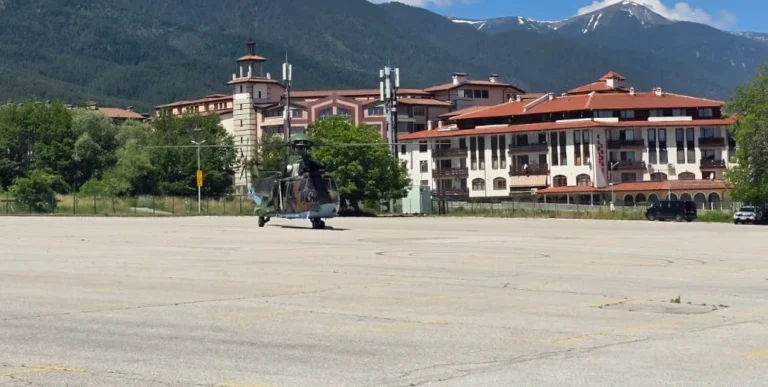
Very often, as happened this week, large military helicopters can be seen over the city. They are usually dark green or camouflaged and generate an extremely loud noise. These are most often machines of the type Eurocopter AS532 Cougar or Mi-17, which come directly from the 24th Air Base in Krumovo (next to Plovdiv).
Pirin is one of the most important training grounds for military pilots in Bulgaria. They perform regular flights for navigation, landing and evacuation in complex mountain conditions and areas with strong turbulence. It is these military crews that respond to large-scale forest fires or extremely serious incidents in the mountains when rescue with a winch is required.
2. Medical helicopters and HEMS
With the development of the air emergency medical service (HEMS) system in Bulgaria, we expect to see the bright yellow-red machines (like Leonardo AW109SPTheir main task is the “golden hour” – rapid medical evacuation of seriously injured skiers, climbers or people with acute medical conditions from the mountain directly to a specialized hospital.
3. Private and commercial machines
During the active winter season, “standard” traffic includes smaller and lighter helicopters (e.g. Airbus H125 or Robinson). They perform a wide range of tasks: from transporting VIP guests to the resort, through panoramic tourist flights, to transporting construction materials and equipment (for example, when building or repairing lifts and snow guns in hard-to-reach parts of the ski area).
Where do helicopters land in Bansko?
Since the city does not have a specialized large-scale airport (heliport), pilots use pre-agreed, safe areas. The most popular points are:
- The St. Peter City Stadium: This is the most important and frequently used landing point for military and medical flights. The space is wide, completely flat, with no tall buildings in the immediate vicinity and offers perfect access for ambulances, fire engines and EMS vehicles.
- The parking lot next to the starting station of Gondola.
- Banderishka Polyana.: It is mainly used for incidents or logistical needs directly related to the ski center in winter.
- Private certified sites: In the vicinity of Bansko, Razlog (including around the golf complexes) and Banya, there are separate private landing zones that serve mainly tourist and VIP flights.
Critical safety rules: What to watch out for?
If you are near the landing or take-off area (for example, passing by the stadium in Bansko), it is absolutely mandatory to follow strict rules for your own safety. Helicopters generate enormous power that should not be underestimated.
Warning: Downwash hazard
The spinning rotors create a hurricane-force wind directed straight down, known as downwash. In large military helicopters like the Cougar, this wind is strong enough to knock an adult to the ground, snap thick branches, and turn small pebbles into dangerous flying objects.
If you see a helicopter landing:
- Keep a huge distance: Do not approach closer than 100-150 meters from the landing perimeter. Under no circumstances should you run forward with a phone in your hand to take pictures.
- Protect your eyes and face: Turn your back to the machine, crouch slightly, close your eyes, and protect your face with a jacket or your hands to avoid dust and debris.
- Secure your luggage: Hats, scarves, light backpacks, ski or snowboard equipment should be securely fastened or pressed against your body. A flying object caught in the rotors of the machine could lead to a fatal aviation accident.
- Protect your hearing: The noise from the engines reaches over 100 decibels. Be sure to cover your ears, paying special attention to small children and pets.
Helicopters over Bansko are a symbol of security and technological progress. Whether it is training our elite pilots or saving lives in the embrace of Pirin, awareness and discipline on the ground are the best support we, as citizens and tourists, can provide them.