

💡 Did you know that: Bansko is not just a ski resort, but a historical fortress of the Bulgarian spirit, which gave the world personalities such as Paisius of Hilendar and Neophyte of Rila?
Key historical dates in the development of Bansko
To understand the city's current appearance, we need to look at the chronology of its growth. The history of Bansko is marked by economic upsurge and spiritual awakening.
| Period / Year | Event / Meaning |
|---|---|
| Antiquity | Settlement by Thracians, Romans, Byzantines and Slavs. Archaeological sites "St. Nikola" and "Sitan Kale". |
| 1576. | First written mention in an Ottoman register of the Çelepkeşans. |
| 18th – 19th century | Flourishing during the Bulgarian Renaissance. Formation of the Bansko Art School. |
| 1835. | Completion of the majestic Church of the Holy Trinity. |
| October 5, 1912. | Liberation of Bansko from Ottoman rule. |
| 20th century – Today | Transformation into a world ski and cultural center. |
Ancient roots and archaeological heritage
The territory of Bansko and its surroundings has been inhabited since ancient times. Archaeological research in the areas of "St. Nikola" and "Sitan Kale" has revealed remains of Thracian fortresses and early Christian basilicas. The Thracians who inhabited these lands were skilled miners and livestock breeders.
Later, during the Roman era, the region gained strategic importance due to its proximity to important trade routes connecting the Aegean Sea with the interior of the Balkans. Evidence of this is the numerous coins, ceramics and tools discovered by historians. However, the first official mention of the name Bansko comes only in the 16th century, when the village was already an established center of sheep breeding (Jelepkeshan).
The Golden Age: Bansko during the Bulgarian Renaissance
The real rise in the history of Bansko The 18th century saw the arrival of local merchants who began exporting cotton, furs, and timber to Central Europe (Vienna, Budapest, Leipzig). Returning, they brought not only goods but also new ideas, enlightenment, and European culture.
Paisius of Hilendar and "Slavonic-Bulgarian History"„
We cannot talk about Bansko without mentioning its greatest son – St. Paisius of Hilendar. Born here in 1722, he marked the beginning of the Bulgarian Renaissance. His book was the spark that ignited national self-awareness and called upon Bulgarians to recognize their race and language.
Neofit Rilski – the patriarch of Bulgarian teachers
Another colossus of the era was Benin, later known as Neophyte Rilski. He was the author of the first Bulgarian grammar and the founder of modern secular education in the country. His home in Bansko is now a museum that preserves the spirit of that time.
Do you want to experience history firsthand?
Book a tour of the old quarter of Bansko and visit the house-museums of the great Bulgarian Renaissance figures.
Bansko School of Art and Architecture
The wealth of local merchants allowed the development of the arts. Toma Vishanov – Molera He founded the Bansko Art School, which combined Orthodox iconography with elements of Baroque and Rococo imported from Europe. His successors continued his work, painting hundreds of churches and monasteries throughout the Balkan Peninsula.
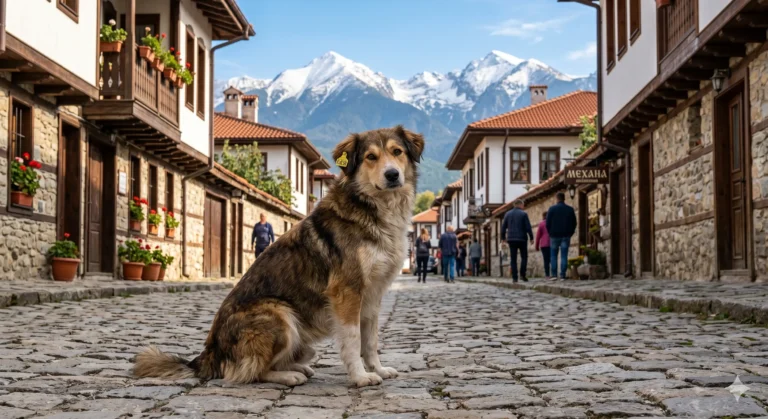
The architecture of the "banska kashta" is unique. It is a true fortress - with thick stone walls, heavy wooden gates and hiding places (kashchi). This was a necessity in the uncertain times of Ottoman rule, to protect the families and wealth of the city.
Holy Trinity Church: A Symbol of the Rebellious Spirit
Built in 1835, the Church of the Holy Trinity is an architectural masterpiece. Interesting fact from the history of Bansko is how the locals managed to get permission to build it. Since Ottoman laws prohibited the construction of new Christian churches, the people of Banska Bystrica used a trick – they buried an icon and claimed that there had been an old church on this site.
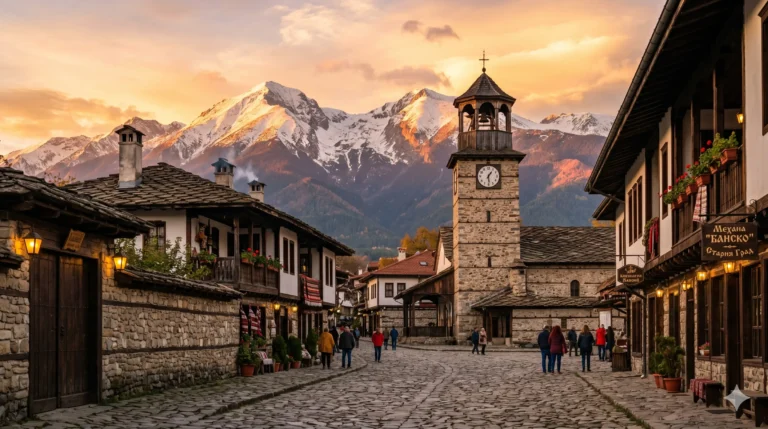
The temple was built entirely with donations and volunteer labor. The 30-meter-high bell tower with a clock mechanism was added later and is still the symbol of the central square.
Traditions and Folklore: Living Heritage
The culture of Bansko is inextricably linked to the mountains and Christian values. To this day, customs that are not found anywhere else in Bulgaria have been preserved.
- The Kuker (Old Woman): Every January 1st, thousands of masked men chase away evil forces with the sound of rattles. The goatskin costumes are the pride of every family.
- Bansko singing: The specific two-part singing of local men has been declared a masterpiece of intangible cultural heritage.
- Culinary traditions: The kitchen is an important part of the history of Bansko. Dishes such as Kapama, Chomlek and Banski Starets are prepared according to recipes that are hundreds of years old.
Liberation and modern appearance
Bansko was finally liberated in 1912 during the Balkan War. The flag of freedom was raised in the Church of the Holy Trinity by the poet Yavorov. In the 20th century, the town began its transformation from a crafts village into a tourist center. Today, Bansko hosts world ski cups and international jazz festivals, but beneath the surface of the modern hotels, the same ancient history pulsates that created it.
📌 Conclusion for the traveler
When visiting Bansko, take time to stroll the cobblestone streets of the Old Town. Hear the bells ring, try the authentic cuisine and chat with the locals. Only then will you know that the history of Bansko it is not just a past, but a living organism that still inspires today.