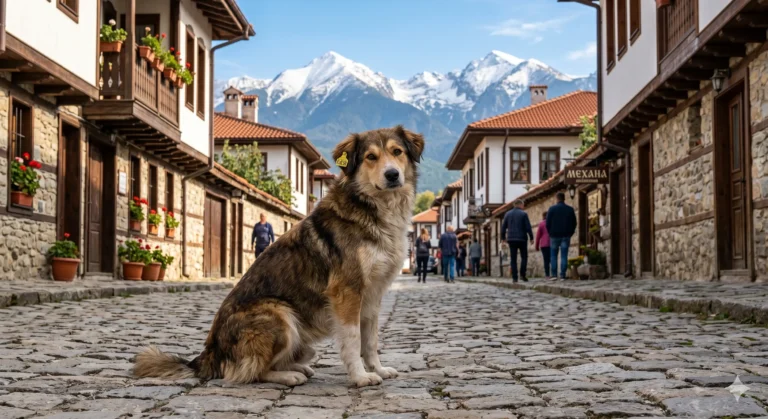

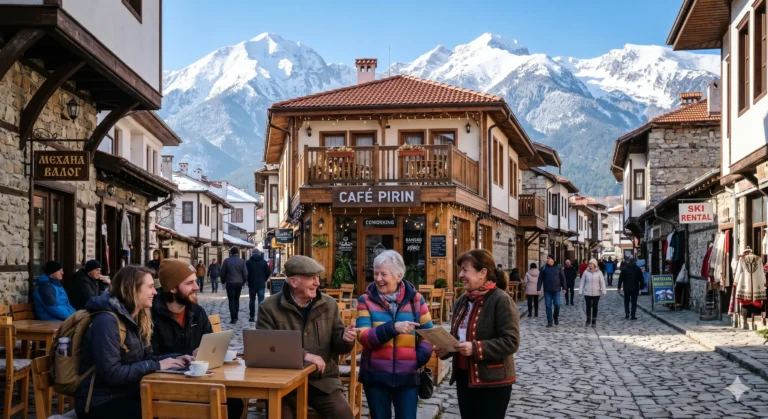
The roots of the Bulgarian families continue to be at the heart of the local community, but today, English, Russian, German, Greek and Hebrew are equally frequently heard on the streets of the city. The various nationalities in Bansko coexist in complete harmony, creating a unique multicultural environment that stimulates the local economy, the real estate market and cultural exchange.
Why does Bansko attract a global population?
The main factors for this increased interest include affordable real estate prices, developed and stable urban infrastructure, fast internet, clean air, and exceptional opportunities for year-round mountain tourism and sports.
Bulgarians in Bansko: The Traditional Core and Modern Entrepreneurs
The town and its surroundings have been traditionally settled by Bulgarians for generations. They remain the predominant ethnic, cultural and administrative group in the region. The local population carries a strong Bulgarian Revival spirit, jealously guarding the old Pirin traditions, folklore and authentic cuisine, which are the basis of the famous Bansko hospitality.
In addition to the indigenous population, however, another important trend has been observed in recent years – internal migration. Many Bulgarians from larger cities such as Sofia, Plovdiv and Blagoevgrad are choosing to move permanently to Bansko. The main motives for them are the search for a more balanced lifestyle, security for their children, as well as the development of their own business in the fields of tourism, catering, services and logistics.
Which foreigners live in Bansko? Profile of the main communities
If you ask yourself who the leading foreign nationalities in Bansko, you will find that the city is home to representatives of over 40 countries. They have formed lasting, resilient communities that actively participate in social life.
1. British and Irish: Pioneers of the property market
The historic boom in foreign presence began en masse after 2005, when citizens of the United Kingdom and Ireland discovered the potential of Bansko. In the peak years of this investment process, over 2,500 apartment units in the complexes around the lower lift station were owned by British people. Although some of these properties were subsequently resold, a large group of British and Irish families have remained here permanently. Usually these are retirees or people working remotely, who own their own clubs, restaurants and are deeply concerned about the fate of the town.
2. Russian-speaking community: Long-term settlement
Russians and citizens from the CIS make up another massive portion of permanent residents. Their profile is diverse, from young families with young children enrolled in local schools and kindergartens, to older people seeking a peaceful environment and a favorable climate. Their presence is noticeable throughout the year, with many of them running small businesses or managing real estate.
3. Balkan neighbors: Greeks, Serbs, Romanians and Macedonians
Due to the geographical proximity, citizens from neighboring Balkan countries have a strong presence. Greeks and Macedonians are extremely active in the commercial sector - they own or rent shops, family hotels and taverns. Romanians and Serbs initially arrived as seasonal tourists, but increasingly invest in permanent housing, attracted by the first-class skiing conditions and easy land access to their homelands.
4. The new migration waves: Ukrainians and non-EU citizens
Following the events of 2022, Bansko has seen a significant increase in the number of Ukrainian citizens. Many of them have found security in the resort town, quickly integrating into the labor market – primarily in the hotel, restaurant and spa services sectors. The Turkish community also maintains a stable presence, supported by investments in trade and fast food. There has also been a steady settlement of single families from Asia and the Middle East.
5. Western Europe and the global phenomenon of digital nomads
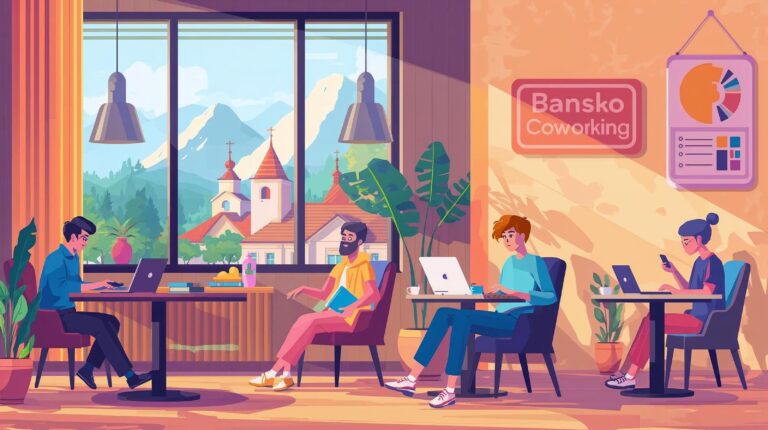
This is perhaps the fastest growing segment in Bansko. Citizens from Germany, Italy, the Netherlands, France, Israel and the USA are making the city their permanent base. Thanks to world-famous co-working spaces and the annual large-scale festival Bansko Nomad Fest, the city attracts hundreds of highly qualified IT specialists, designers, marketers and online entrepreneurs.
Statistical analysis: Percentage of resident population
Since a large proportion of foreign nationals reside in the city as property owners or long-term residents (without changing their official permanent address in the GRAO), the exact statistics vary. However, based on data from local surveys, property registries and utilities, the expert distribution of residents looks like this:
| Nationality / Ethnic group | Percentage ratio (Approximate) | Basic profile and employment |
|---|---|---|
| Bulgarians | Above 75% | Indigenous people, administration, tourism, business |
| British and Irish | 5% – 7% | Retirees, restaurant owners, remote workers |
| Russian-speaking citizens | 3% – 4% | Families with children, property investors, retirees |
| Balkan countries (Greece, Serbia, Romania, North Macedonia) | 3% – 4% | Retailers, restaurateurs, seasonal managers |
| Ukrainians, Turks and others outside the EU | 2% – 3% | Service workers, new entrepreneurs |
| Western Europeans and nomads (Germany, Italy, Israel, etc.) | 1% – 2% | Digital nomads, IT professionals, freelancers |
It is important to note that during the winter season (December to April) these ratios change dramatically. Then the city practically doubles and triples its population, with the foreign presence reaching enviable levels, turning Bansko into a true Babylon of the Balkans.
Infrastructure of Difference: International Establishments and Local Businesses
The multicultural composition of the population has a direct impact on the appearance of the retail network. In Bansko, traditional kapama and chomlek are no longer the only dishes offered in authentic taverns. The city has an extremely rich palette of culinary and cultural sites created by the expats themselves.
- English and Irish pubs: Places where live sporting events are broadcast and authentic island beer is served.
- Italian restaurants: Run by Italians, offering original oven-baked pizza and artisanal pasta.
- International stores: Specialized outlets for goods from Eastern Europe, the UK and Asia that satisfy the specific tastes of the communities.
- Mixed culinary concepts: Many establishments successfully combine Bulgarian products with international recipes to attract the widest possible range of customers.
Social integration and cultural life
One of Bansko's greatest advantages is its high level of inclusion. The various ethnic and national minorities (including the local Roma population, which actively participates in the municipal communal and construction activities) find a common language in everyday life. Foreign communities do not encapsulate their existence. They often organize their own interest clubs, language bars, charity initiatives, bazaars and joint sports events.
Interesting fact: The international community in Bansko regularly participates in environmental actions to clean up Pirin National Park, as well as in support of local schools and social homes, proving that they feel the city as their true and valuable home.
Conclusion: The future of Bansko as a cosmopolitan center
In summary, we can say that Bansko successfully preserves its bright Bulgarian identity, history and culture, while skillfully developing on the model of a modern European multicultural society. The interweaving of Balkan, British, Eastern European and Western European influences enriches local businesses, injects fresh capital into the property market and breathes new life into the town outside the active ski season.
Whether you are a Bulgarian who has decided to escape the noise of the big city, or a foreigner seeking a safe and inspiring refuge in nature, the diverse nationalities in Bansko They will welcome you with open arms and a sense of true global community.