



What is the pine processionary moth and why is it so dangerous?
The pine processionary moth is a moth species whose larvae (caterpillars) develop in pine forests. They are easily recognizable – they move in long colonies, closely following each other, forming a kind of “procession” (hence their name). They can most often be seen in late winter and early spring, when they descend from the trees to burrow into the soil and pupate.
The danger lies not in the bite, but in their defense mechanisms. Each caterpillar's body is covered with hundreds of thousands of microscopic hairs containing the protein thaumetopoein – an extremely strong allergen. At the slightest threat, the caterpillars shoot these hairs into the air. They can be carried by the wind and fall on the skin, eyes or respiratory tract, even without touching the insect itself.
Risks to human health
Exposure to toxic hairs can lead to serious medical conditions. The most common symptoms include:
- Severe and painful itching accompanied by a rash (contact dermatitis).
- Redness, swelling and inflammation of the eyes (conjunctivitis) if the hair gets there.
- Respiratory problems – coughing, shortness of breath, and throat irritation when inhaling.
- In rare but serious cases in more sensitive people, anaphylactic shock may occur.
Deadly danger to pets (dogs)
Unfortunately, the most common victims of the pine processionary moth in Bansko are pets. Dogs are curious by nature and often try to sniff or lick unfamiliar moving objects on the ground. Contact of the toxic hairs with the dog's nose, tongue or mucous membrane causes an immediate and extremely painful reaction.
Symptoms in dogs include excessive salivation, swelling of the muzzle and tongue, vomiting, and difficulty breathing. If immediate veterinary care is not provided, the tongue tissue can necrotize (die off), and in more severe cases, the animal can die from suffocation or toxic shock. Therefore, it is critically important that dogs are strictly supervised during a walk in a pine forest.
Where in Bansko have the caterpillars been spotted this year?
According to recent reports from locals and tourists, the active migration of the pine processionary moth is already a fact in the forests above Bansko. Locations where you should be especially careful include:
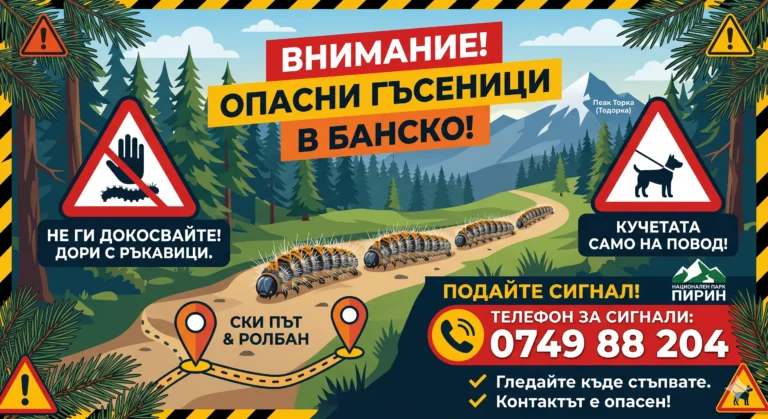
- Ski path: Especially in the area between the wall with the graffiti and the exit near the "Motikata" restaurant.
- Rollban Trail: One of the most preferred hiking trails for a leisurely walk, where colonies have been spotted over the past week.
- Other pine forests: Be alert in all forest areas in the lower part of Pirin National Park, especially where you see the characteristic white “cocoons” (nests) on the branches of the pine trees.
- Look at your feet: Always monitor the path ahead of you for moving tracks.
- The dog on a leash: This is an absolute must! Do not let your dog run free in the bushes and off-trails during the spring season.
- Appropriate clothing: Wear long pants and closed-toe shoes, even in warm weather. This minimizes the risk of hair coming into contact with bare skin.
- Teach your children: Warn young children never to touch the "fluffy caterpillars", no matter how interesting they may seem.
First aid: What to do in case of an accident?
When in contact with people:
If you feel a burning sensation or notice a rash after being in the forest, immediately wash the affected area thoroughly with soap and water. Do not rub the skin! Rubbing will drive the microscopic hairs deeper. Wash your clothes at a high temperature. If your eyes are affected, you have difficulty breathing, or have a severe allergic reaction, seek medical attention immediately at the Emergency Center in Bansko or Razlog.
When in contact with a dog:
If your dog sniffs or licks a pine processionary, act quickly. Rinse his mouth thoroughly with water (if you have a bottle), being careful not to touch the hairs yourself. Do not try to pick at his mouth with your bare hands. Immediately transport the animal to the nearest veterinary office! Weather for response is critical to saving your pet's life and health.
Reporting to the institutions
Dealing with the pine processionary moth population in protected areas is a complex process that is managed by the relevant authorities. If you notice active colonies of caterpillars on busy hiking trails or near the ski slope in Bansko, do not try to destroy or move them yourself (even with a stick or gloves, as the hairs will scatter in the air).
The most responsible action is to mark the location in your mind or on your GPS and report it to the experts from the Pirin National Park Directorate, who are responsible for monitoring these pests.
Call Pirin National Park: 0749 88 204
Share this information with friends, mountaineers and dog owners who live in or plan to visit Bansko during the spring months. Awareness is the best prevention against unpleasant incidents in our beautiful mountain!