


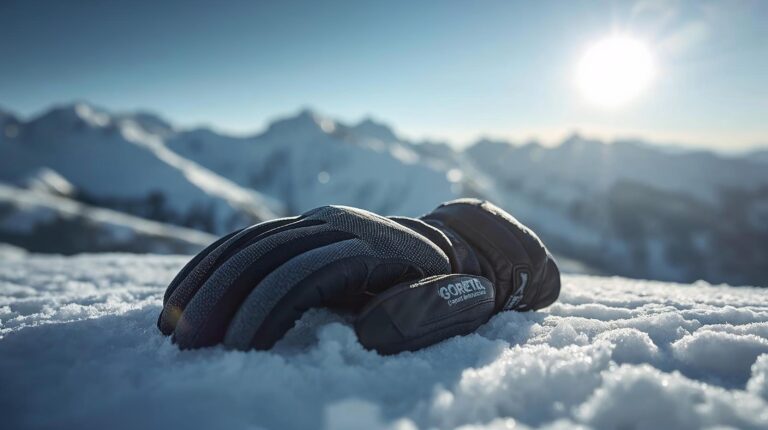
There's nothing worse than standing on the top of Todorka, a perfectly groomed ski slope opening up before you, and all you can think about is how unbearably cold your fingers are. The right one choosing ski gloves It's not just buying another winter accessory - they are a critical part of your gear, absolutely equal in importance to ski boots and a helmet.
In a mountain like Pirin, where conditions change in minutes – from icy wind in the morning to warm sun in the afternoon, your hands are the most vulnerable. They are the first to lose heat when the body decides to keep its internal organs warm. This expert guide will help you navigate the sea of technologies, membranes and top brands to find the perfect pair that will make you forget about the cold in Bansko.
There is no one pair of gloves that is perfect for both -20°C in January and +10°C in April. Experienced skiers often have two pairs or use a system of “inner gloves” (liners) to regulate the warmth according to the conditions on the piste.
1. The Eternal Dilemma: Mittens vs. Gloves
The first and most important question you should ask yourself when you choosing ski gloves, is: How chill are you and how much dexterity do you need?
Gloves
This is the classic choice for most skiers on the piste.
- Advantages: They offer maximum dexterity. You can easily lace up your shoes, open your jacket zippers, hold your poles securely, and adjust your mask.
- Disadvantages: Since each finger is insulated on its own, they cool down much faster.
- Who are they for: For aggressive skiers who warm up their body quickly through movement, as well as for skiing in milder weather (February-March).
Mittens
The absolute champions in heat retention.
- Advantages: Significantly warmer. The fingers are together (except for the thumb) and share their body heat. The air pocket inside acts as a stove.
- Disadvantages: Extremely low dexterity. Any fumbling in the pocket for a ski pass or phone almost always requires removing the paw.
- Who are they for: For people with poor circulation, snowboarders (who don't hold poles) and for harsh January blizzards.
Hybrids: Lobster & Heated Gloves
- Lobster: Three-finger gloves (thumb and index finger are separate, the rest are together). They are the golden mean between excellent warmth and basic functionality.
- Heated Gloves: The hit of recent years. They have built-in heating elements and rechargeable batteries that actively heat for up to 8-10 hours. They are expensive, but they are invaluable for people suffering from Raynaud's syndrome.
2. Materials and Membranes: The Secret to Dry Hands
There is no compromise here. A quality ski glove has three main layers that work in harmony:
- Outer shell (Shell):
Synthetics (Softshell/Nylon): Lightweight, very breathable and flexible. They are more affordable and dry quickly.
Genuine leather (Goat or Calf): The absolute classic. Extremely durable, windproof and after a few rides it takes the exact shape of your hand. However, it requires regular maintenance with wax. - The membrane (the barrier against water):
Search for the label Gore-Tex®. This is the gold standard – it does not let water in from the outside (when it snows or rains), but allows sweat to escape. Alternative branded membranes such as R-Tex (Reusch) or C-Zone (Hestra) also offer brilliant quality for their price. - Insulation (Heat):
Synthetics (Primaloft / Thinsulate): The best choice for skiing. They keep you warm even when wet with sweat, and dry extremely quickly.
Down: Unsurpassed in warmth and lightness, but if the down gets wet (from sweat or snow), it stops warming. Recommended only for very dry and deep cold.
3. Size Guide: The Critical Moment
Many people buy gloves that are too tight, thinking that they will have a better grip on the poles. This is a huge mistake! The heat comes from the air that circulates around your fingers inside the insulation. If the glove is too tight, it compresses the insulation, cutting off your blood circulation and your hands freeze in minutes.
- Get a flexible tailor's tape measure.
- Measure the circumference of your dominant hand (if you are right-handed – the right one).
- The tape should go through the knuckles (the widest part of the palm), but WITHOUT involving the thumb.
- Curl your hand slightly into a half-fist – this gives the most realistic size in a riding position.
Size charts
Men's / Unisex sizes
| Size (Letter) | Size (Number) | Circumference (cm) |
|---|---|---|
| S | 7.5 – 8 | 18 – 20 cm |
| M | 8.5 – 9 | 21 – 23 cm |
| L | 9.5 – 10 | 24 – 26 cm |
| XL | 10.5 – 11 | 27 – 29 cm |
Women's sizes (Narrower at the fingers and palm)
| Size (Letter) | Size (Number) | Circumference (cm) |
|---|---|---|
| XS | 5 – 5.5 | 13 – 14 cm |
| S | 6 – 6.5 | 15 – 17 cm |
| M | 7 – 7.5 | 18 – 19 cm |
| L | 8 – 8.5 | 20 – 22 cm |
4. Top Manufacturers and Brands: Who Dictates the Rules?
When buying gloves, investing in a proven brand pays off many times over. Here are the market leaders that you will also find in premium stores in Bansko:
- Hestra: Swedish glove makers. They are the absolute benchmark for quality, using the highest grade goat and calf leather. Their model Army Leather Heli Ski is a legend among freeriders in Bansko. These gloves can literally outlive you if you maintain them with wax.
- Medicines: German precision. In addition to making superb gloves, Leki is known for its system Trigger 3D / Trigger S. The gloves have a built-in small “loop” that attaches directly (with a click) to the brand’s poles, eliminating the need for annoying pole straps.
- Reusch: The choice of professional racers. The brand is synonymous with perfect fit and innovation in the sports segment. Their racing models have carbon knuckle protectors, but they also offer fantastic soft models for amateurs.
- Black Diamond: A brand born in mountaineering. Their focus is on brutal toughness and survival in extreme conditions. The model Guide is one of the warmest on the planet and is widely used by ski patrols.
- Dakine & Burton: The leaders among snowboarders. These brands offer great value for money. Many of their models (like the Dakine Titan) come with “liners” (thin inner gloves) and have built-in wrist protectors that prevent breakage when falling on ice.
5. The details that make a huge difference
When making your choice of ski gloves, don't miss these "extras" that you will appreciate while riding the open-air lift:
- Cuff: The Gauntlet It is worn over the sleeve of the jacket and is the best protection against deep snow entering when falling. Under cuff It tucks under the sleeve and looks more elegant and tucked in.
- Wrist Straps (Idiot Cords / Leashes): Absolutely essential! These are the elastics that keep your gloves hanging from your wrists when you take them off on the lift to check your phone. They save you from dropping your glove into the abyss.
- Goggle Wipe: A small rubber or suede piece on the thumb designed specifically to wipe snow off your ski mask without scratching the visor.
- Inner gloves (Liners): Thin gloves (often made of merino wool or Lycra) worn under your main gloves. They add about 20% more warmth and allow you to work with a touchscreen without exposing bare skin to the frigid air.
6. Proper maintenance: How to avoid ruining your gloves?
The most common mistake tourists make in Bansko is throwing their wet gloves directly onto the hot radiator in the hotel or tavern after skiing. This is disastrous! The high temperature melts the breathable membrane and dries out the genuine leather to the point where it cracks and tears.
The rule: Dry your gloves at room temperature, preferably upright (placed on a bottle or a special shoe dryer with gentle, cool air). If you have leather gloves (like Hestra), coat them with a special leather wax at least twice a season – this way they stay soft and 100% waterproof for years.
Conclusion
If you only ski a few sunny days a year, a mid-range glove with a synthetic membrane will do the job perfectly. However, if you spend every free minute on the slopes of Pirin and your hands freeze easily – invest in a high-end glove or a hybrid model from a proven brand. Your hands will thank you!