

1. The cable car and the kingdom of white sports
This is the most significant and obvious difference that marks the different fate of the two cities. Bansko is not just a town in the mountains – it is a world-renowned winter resort, winner of numerous international awards.
The gondola and the ski slopes
The city has direct access to the mountain via the modern cable car (Gondola), which in just about 25 minutes takes thousands of tourists daily from the city to the heart of Pirin (the area Banderishka Polyana.). Available to enthusiasts are 75 km of perfectly maintained ski slopes, suitable for both beginners and experts. Among them, the legendary Tomba slope stands out, named after the ski legend Alberto Tomba. This huge network of lifts, lifts and artificial snow guns makes Bansko a regular host of starts from the Alpine Skiing World Cup. Such ski infrastructure is completely absent in Razlog.
The outdoor ice rink
At the end of the ski day, tourists in Bansko can enjoy one of the most favorite winter entertainments – the large outdoor ice rink. Located at a key location in the town (near the starting station of the lift), it operates throughout the cold months, offers skates for rent and adds an additional fairy-tale and romantic touch to the winter atmosphere, which delights families and young people.
2. Unique architecture: Houses as impregnable fortresses
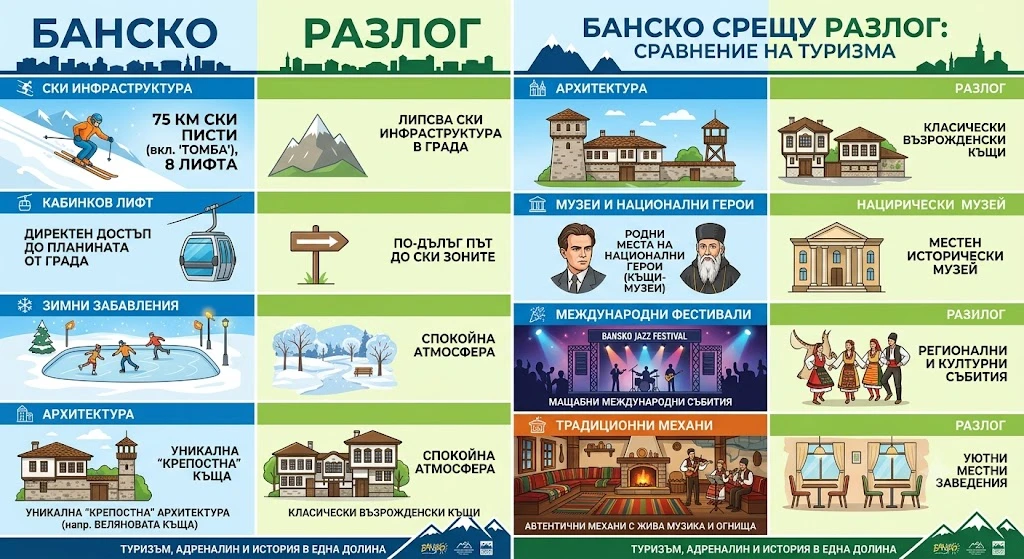
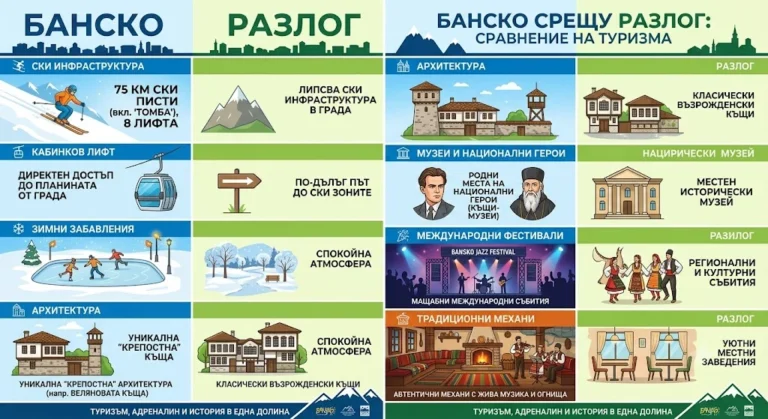
A visual comparison of the main tourist differences between Bansko and Razlog, including ski infrastructure, architecture, museums and festivals.
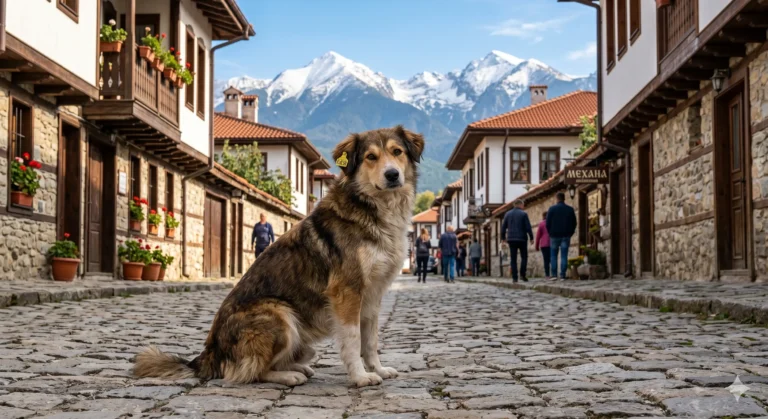
The architectural appearance of the old town in Bansko is a phenomenon that differs radically from the classical Razlog urban architecture. While Razlog is dominated by beautiful, but more open and welcoming Renaissance houses, the old Bansko homes were built in times of uncertainty by wealthy local merchants who had traveled all over Europe.
These historic buildings resemble small fortresses with thick stone walls, small windows, heavy massive gates, internal battlements and even secret hiding places. The most striking and preserved example of this unique style is Velyanova's house. It is a true masterpiece of architecture and mural painting, which clearly shows how the people of Banska Bystrica protected their wealth and families from external raids, without skimping on beauty, fine carvings and comfort in the interior spaces.
3. Hearth of the Bulgarian Renaissance: The House-Museums
Bansko is the birthplace of titans of Bulgarian history, spirit and literature. The specific cultural and historical heritage here is carefully collected in museum complexes, the likes of which you will not find in the neighboring city. A visit to them adds enormous educational value to any vacation:
- Nikola Vaptsarov House Museum: Located in the central square, this is the poet's birthplace. The museum is among the first in the city and preserves the authentic spirit of his era, including original manuscripts.
- Neofit Rilski Museum (The Benin House): The home of the patriarch of the New Bulgarian education is a magnificent architectural and historical monument, enveloped in the silence of the cobblestone streets in the old town.
- Spiritual and Historical Center "Saint Paisius of Hilendar": Built exactly on the site of the burned-down home of the author of "Slavonic-Bulgarian History." The center is extremely modern and offers an accurate reconstruction of the monastic cell in the Hilendar Monastery, where the epochal work was written.
4. A world-class festival stage
Both towns have a rich cultural calendar and zealously guard their traditions. Razlog, for example, is famous for its grand puppetry festival “Starchevata”, which gathers thousands of tradition keepers on January 1. But Bansko plays in a completely different league when it comes to international commercial and art events.
Every summer, the central square “Nikola Vaptsarov” turns into a huge open stage for the famous Bansko Jazz Festival. This large-scale event brings together world stars of jazz, soul and funk music, turning the mountain into a crossroads for music lovers from all over Europe for more than a week. In addition, the town hosts the Bansko Film Fest (for mountain cinema), Summer Opera Evenings and various culinary exhibitions. Such a caliber of events requires logistics and a huge bed base, which Bansko is used to operating with on a daily basis.
5. The Hospitality Industry: Authentic Bansko Taverns
Razlog can definitely boast of wonderful, modern and delicious restaurants, often preferred even by the locals of Bansko because of the tranquility and excellent service. But The emblem of Bansko's nightlife and culinary life are its traditional taverns..
These establishments are not just places to eat – they are created as a complete attraction that welcomes both Bulgarians and foreign guests. They are characterized by a huge concentration (especially around Pirin Street and in the old town), live folklore music, the smell of roasting meat from massive open fires and an interior entirely dominated by wood, carved stone and colorful household rugs. Here you can try brands such as Banska Kapama, Chomlek, Grandma's Fuchuri and the famous Banska Starets. This intensity and focus on creating an authentic “show” for the tourist is a highly specific feature of the local business model.
Summary: Bansko or Razlog?
In conclusion, the decision whether to spend the time Whether you are in Bansko or Razlog depends on the emotion you are looking for. If Razlog is the place where you can feel the slower, calmer pulse of real life in the valley, cycle along flat paths and relax away from the crowds, then Bansko is the adrenaline machine and international culture. Bansko has skillfully converted its glorious historical past, unique architecture and raw nature into a complete, modern tourist product that continues to be without an absolute equivalent in the region.