

1. MFA vs. MIA: The Key Difference
One of the most common confusions among newcomers to Bansko is the difference between the Ministry of Foreign Affairs (MFA) and the Ministry of Internal Affairs (MVRA). Understanding this distinction will save you a lot of wasted time.
💡 Who is responsible for what?
- Ministry of Foreign Affairs (Foreign Affairs): Responsible for you before to arrive in Bulgaria. They manage Bulgarian embassies and consulates around the world, issue entry visas (Type C and Type D) and legalize foreign documents.
- Ministry of Interior (Internal Affairs / Migration Directorate): Responsible for you after as you are already in Bulgaria (e.g. in Bansko). They issue you a residence ID card and register your address.
2. Visa information: Your entry ticket to Bulgaria
If you are a citizen of a country outside the European Union (a so-called “third country” such as the USA, UK, Canada, Israel or others), your entry into Bulgaria is regulated by the directives of the Ministry of Foreign Affairs. Depending on the purpose of your trip to Bansko, you will need a different type of visa, issued by the Bulgarian consulate in your home country.
Type "C" Visa (Short-term Stay / Tourism)
This is the classic tourist visa. It allows you to stay in Bansko for a ski vacation or summer tourism for up to 90 days within any 180-day period. It is important to know that many countries (including the UK and the USA) have a visa-free regime with Bulgaria for short tourist trips, but the rules for the 90-day limit remain exactly the same.
Type "D" Visa (For Long-Term Residence)
If you are planning to move to live in Bansko, open a business or retire here, a tourist visa will not do the trick. You will need to apply for a Visa D at the Bulgarian embassy in your country. This process is entirely administered by the Ministry of Foreign Affairs and can take 30 to 45 days. Only after you receive this visa in your passport can you arrive in Bansko and apply for a local ID card.
⚠️ Warning: Status change prohibited
Bulgarian legislation is categorical: you cannot enter Bulgaria as a tourist (with Visa C or visa-free) and apply for long-term residence while you are in Bansko. Visa D is issued only and solely from Bulgarian diplomatic missions abroad!
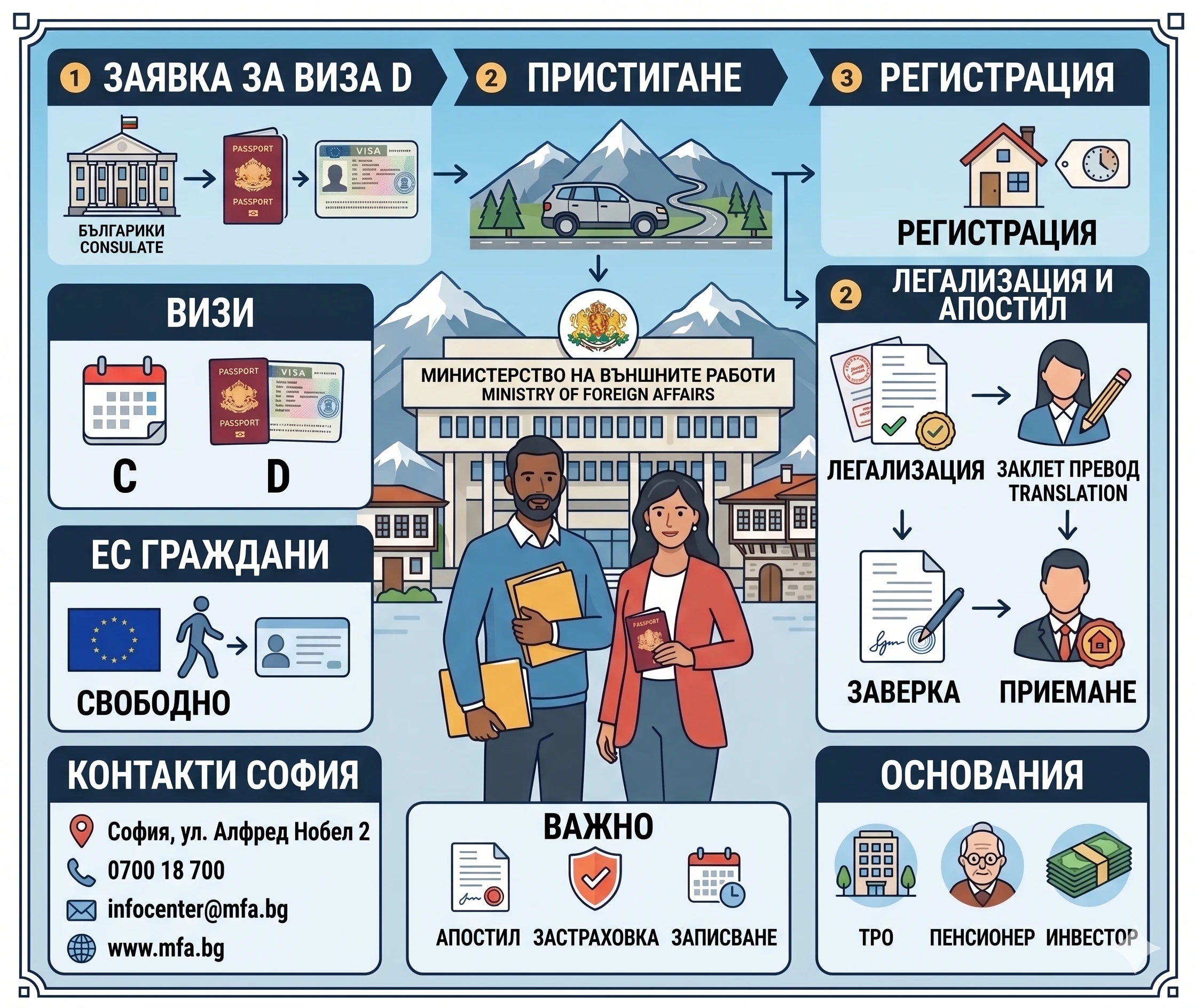
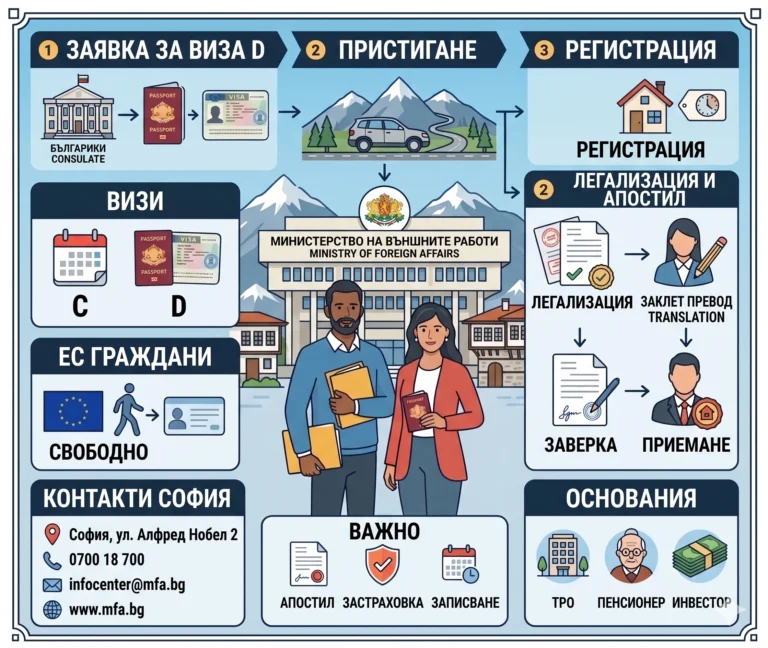
A detailed visual guide describing the process of settling foreigners in Bulgaria – from applying for a Visa D to address registration. Covers grounds for residence, legalization of documents and contacts.
3. Consular services and Legalization of documents (Apostille)
This is the area of MFA that foreigners and investors in Bansko encounter most often in their daily lives. When you buy a property, register a company or get married in Bulgaria, the local authorities will require official documents from your home country (for example, a criminal record certificate, birth certificate or power of attorney).
Bulgarian notaries in Razlog and Bansko will not simply accept a printed document in English. It must be officially recognized through a process called legalization.
The step-by-step process:
- Apostille: The document must receive an “Apostille” stamp from the relevant government authority in your home country.
- Translation: Once it arrives in Bulgaria, the document is translated by a “sworn translator” (authorized by the Ministry of Foreign Affairs).
- Certification at the Ministry of Foreign Affairs: The translation is taken to the Consular Relations Directorate of the Ministry of Foreign Affairs in Sofia, where the translator's signature is certified. Only then does the document have legal value in Bansko.
The good news is that there are specialized translation agencies in Bansko that offer the "legalization at the Ministry of Foreign Affairs" service remotely, sending the documents to Sofia via courier, saving you the trip to the capital.
4. Information and rights of EU citizens in Bulgaria
If you are a citizen of a member state of the European Union, the European Economic Area (EEA) or Switzerland, your rights are significantly broader thanks to the free movement treaties.
- Entering the country: You only need a valid ID card or passport. You do not need visas from the Ministry of Foreign Affairs.
- Stay up to 3 months: You can stay in Bansko for up to 90 days without any administrative burdens, apart from the standard address registration at the local police station (which is usually done by your hotel or landlord).
- Long-term establishment: If you decide to stay permanently, the Ministry of Foreign Affairs is no longer involved in your status. The procedure is transferred entirely to the Ministry of Interior (Migration Directorate), where you receive an “EU Citizen Residence Certificate”.
5. Where are the institutions located?
The Ministry of Foreign Affairs is a centralized institution and there is no office in Bansko or in the regional center Blagoevgrad.
🏛️ Ministry of Foreign Affairs – Consular Relations Directorate (Sofia)
For legalization of translations of documents from abroad.
📍 Address: Sofia, 2 Alfred Nobel Street
📞 Phone: +359 2 948 20 18
🌐 Website: www.mfa.bg
Whether it is a matter of issuing a Visa D for your relocation, or legalizing a power of attorney to purchase a mountain villa, the Ministry of Foreign Affairs plays a key role in your integration. Prepare your documents in advance, use the services of local translators and enjoy the peaceful life that Bansko offers.
Do you need document legalization or translation in Bansko?