
The statistics behind successful tourism in Bansko
Numbers often tell the most accurate story about the development of a destination. In recent years, the large-scale tourism in Bansko registers impressive levels of attendance. With over 362,000 tourists annually, the city generates nearly one million overnight stays – a volume that clearly demonstrates the capacity of the local economy and bed capacity. These data turn dry statistics into thousands of shared moments on the lifts, new friendships and unforgettable memories spread to all corners of the globe.
An interesting aspect of the visitor profile is the balance between the domestic and international market. Half of the total flow is formed by Bulgarian tourists (about 181,000 people), who choose the mountains as an escape from the stress of the big city. At the same time, foreign guests (over 154,000 people) realize a longer stay, accumulating a total of 665,000 overnight stays. This ratio ensures stability for the business during different periods of the year.
| Indicator (Annual basis) | Number of tourists / Overnight stays | Market share |
|---|---|---|
| Total number of tourists | 362 000 | 100% |
| Bulgarian tourists | 181 000 | 50.0% |
| Foreign tourists | 154 000 | 42.5% |
| Total overnight stays | Nearly 1,000,000 | – |
Geography of guests: Where do international tourists come from?
The diversity of nationalities is among the resort's greatest advantages. Each market has its own specifics and requirements, which local hoteliers and restaurateurs have learned to satisfy perfectly:
- Romania: Our most loyal neighbor rightfully holds the leading position with over 30,000 tourists per year. Romanians value the quick land access and the similarity in Balkan temperament, combined with the high-class ski infrastructure.
- Israel: Almost 24,000 guests from Israel bring a specific dynamic to the resort. Since winter in their homeland does not offer snow sports, they arrive in organized groups for longer periods, often respecting their traditions and demanding specific service (kosher food).
- Greece: Over 22,000 Greeks choose the slopes of Pirin. For them, Bansko is the perfect escape from the summer heat and an excellent choice for winter weekend vacations due to its proximity to the border.
- United Kingdom: The British market exceeds 19,000 visitors. Traditionally attracted by the economically advantageous packages, they remain enamored with Bulgarian hospitality and authentic cuisine, with many of them investing in their own properties here.
- North Macedonia and Serbia: With 13,000 and tens of thousands of tourists during the active months, respectively, the neighbors from the Western Balkans feel at home in Bansko, sharing similar language, culture, and culinary preferences.
Winter season dynamics and market transformations
When the first snow falls, the magic of winter tourism in Bansko is revealed in full splendor. During the winter months (December - March) the distribution of forces changes dramatically. The Romanian presence jumps to 62,000 people, Greek tourists reach 57,000, and the market in Turkey records a phenomenal growth of 29.1%, sending over 53,000 guests. Turkish skiers are increasingly rediscovering Bansko as a better alternative to the newly built resorts in their own country.
The UK also saw steady growth with 53,000 winter visitors, while markets such as Germany (+9.7%) and Serbia (+10.7%) showed steady growth. These visitors are looking for authenticity, a lack of frills and real value for their money. In contrast, the geopolitical situation has had an impact on the Israeli market, which saw a temporary decline of 62.6% – a clear sign of how external factors are affecting global travel.
Current Trends: Season 2024-2025
The last winter season brought in over 190,000 tourists between December and mid-April. Bulgarian families remain the backbone of weekend tourism with 163,250 visits, while the Greek market demonstrated a strong comeback with over 20,000 registered skiers.
Why does Bansko remain a force of attraction for the world?
The formula behind the destination's success is based on three main pillars that make it competitive even with established Alpine resorts:
1. Unique geographical location
The city is located in the perfect location in the Balkans - close enough to major regional capitals for a quick weekend trip to Bansko by car, and at the same time quickly accessible via the airports in Sofia and Plovdiv to the Central European and Middle Eastern markets.
2. Best price value in Europe
Western European tourists quickly calculate that the prices of lift tickets, accommodation and food in the Alps exceed those in Pirin several times. Bansko offers world-class slopes (host of the Ski World Cup) at a fraction of the price in France or Austria.
3. The advantages of the Schengen area
With the gradual opening of borders and facilitations within the Schengen area for Bulgaria, queues at checkpoints are decreasing. Travel is becoming more seamless, which is stimulating impulsive bookings by European citizens.
Infrastructure and accommodation capacity
To accommodate this huge flow of nearly 60,000 tourists in the peak month of February alone, Bansko has developed a large and diverse bed base. The town has:
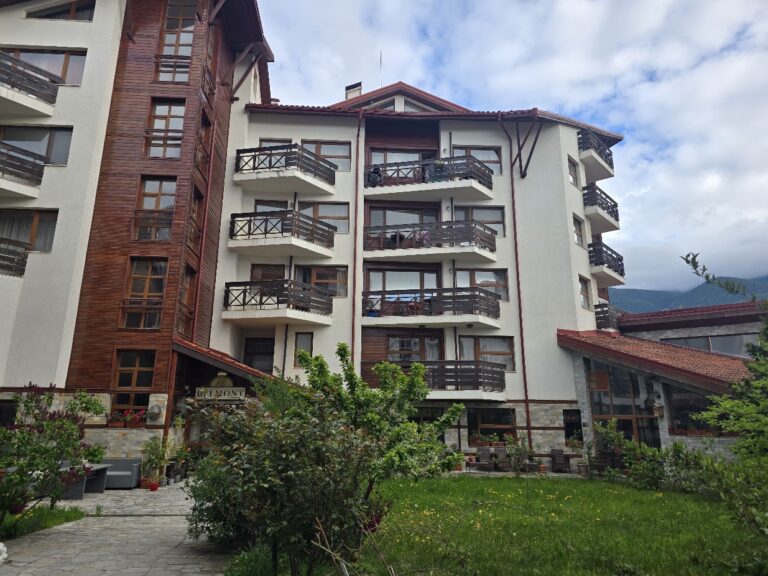
- 92 classic hotel complexes (including luxury 5-star properties)
- 38 family hotels offering comfort and personal attention
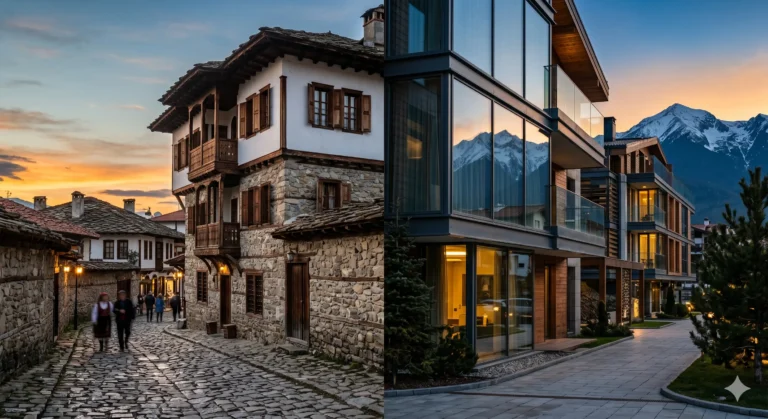
- 142 guest houses capturing the spirit of old Bulgarian Renaissance architecture
- 785 private apartments and rooms for rent through global platforms
The total capacity exceeds 18,693 beds. This diversification allows the resort to meet the needs of both low-budget students from the UK, as well as corporate clients and digital nomads, who are increasingly choosing the city for long-term stays and co-working.
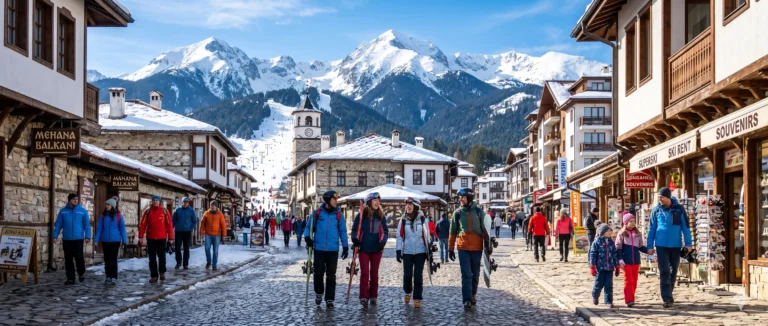
Ultimately, the modern tourism in Bansko is a prime example of how a small mountain town can become a global port. A place where a Greek mother shares the same ski slope with a Romanian family, and British office workers unwind in a traditional tavern to the sounds of Bulgarian folklore. Bansko is no longer just a geographical point – it is a shared home for tourists from all over the world.