

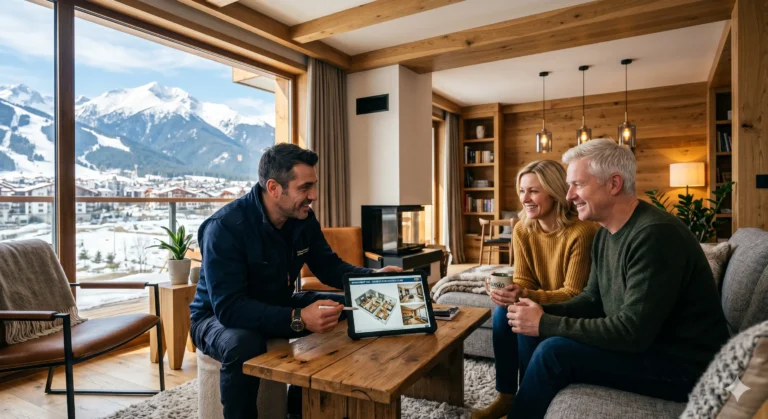
Despite this huge market potential, local Facebook groups are often a place of complaint. Owners write: „"I can't find a reliable craftsman I can trust"“, while local experts counter: „"Foreigners are difficult customers"“. The truth is, the root of the problem is not technical skills, but communication and cultural differences. This guide will teach you how to become the preferred choice for international investors.
1. The Trust Problem: Why Are Foreigners Afraid?
Many of the owners in Bansko have bitter experiences from the past. Ever since the construction boom, there have been legends of missing deposits and magically inflated offers. To win a project for renovations in Bansko, you need to break this stereotype.
- Absolute transparency: Never give a price „by eye.“ Prepare a written quote (Excel or PDF) where labor and materials are separated.
- Documenting the hidden: Take pictures of the pipes and cables before closing the walls. This is proof of quality that foreigners value extremely highly.
2. Communication as the key to success
Language barrier is no longer an excuse in the age of artificial intelligence. When you offer renovations in Bansko, professionalism in dialogue is more important than a perfect accent.
Use written communication via WhatsApp or email. This allows you to use tools like Google Translate or DeepL, and also creates a “written trail” of what was agreed upon. Business advice: Video chats are your best currency. A 5-minute live report from the site builds more trust than hundreds of messages.
Accuracy – the European standard
In Western Europe, „tomorrow at 10:00“ means exactly 10:00. For a foreigner, being late is a sign of lack of professionalism. If you are late – just send a short message. They will understand you as long as they are informed in time.
3. High standards: What does „done“ mean?
The finishing touches are what separates the mediocre craftsman from the professional. renovations in Bansko for foreigners, cleanliness is part of the service.
| Service | Customer expectation | Your bonus |
|---|---|---|
| Painting | Straight lines, no drips | Covering furniture with nylon |
| Plumbing / Electricity. | Functionality | Installation diagram (photos) |
| Cleaning | Discarded waste | Professional cleaning |
Purity as a religion: For the English client, the handyman hasn't done his job if he's left dust on the furniture or cigarette butts on the balcony. Include a "cleaning" clause in your quote - they'll happily pay for it.
4. Reputation on the “Bansko Notice Board”
The largest local Facebook group is a double-edged sword. One negative post can shut down your business for months. On the other hand, one positive review from a „local“ English or Irish person will keep you in business for the entire season.
How to become a Trusted Builder?
- Warranty: Give a 6 or 12 month guarantee on your work. If something leaks, go and fix it right away.
- Portfolio: Maintain a Facebook page with „Before and After“ albums. Pictures speak louder than words.
- Proactivity: When you successfully complete the project, ask the client for a review in the groups.
5. Mountain Specifics: Be an Expert
Your biggest advantage when performing renovations in Bansko is the knowledge of the harsh climate. Foreigners often want solutions that work in London but are disastrous in Pirin.
Put yourself in the role of a consultant. Explain why it is necessary “"winterizing" of installations and why regular latex will mold without proper ventilation (recovery). When you protect them from future costs, you become their partner, not just a hired worker.
Critical points for mountain properties:
- Frost resistance: Only granite tiles for the terraces (no terracotta).
- Insulation: External plumbing pipes must be deeply insulated or have a heating cable.
- Condensation: Installing dehumidifiers or automated ventilation systems for apartments that are empty.
Conclusion: The path to sustainable business in Bansko
The successful ones renovations in Bansko in 2026 are not determined by the lowest price, but by the highest trust. Be transparent, meet deadlines and invest in the details. The international community in the city is closely connected and a good reputation here is your most valuable asset.